Waste Water Heat Recovery for Showers
Why WWHRS-Compatible Electric Showers Matter for Social Housing Retrofit
As social housing providers face growing pressure to decarbonise homes, one challenge continues to stand out: hot water.
For many flats, apartments and harder-to-treat properties, large low-carbon heating upgrades can be complex, disruptive and expensive to install. Space constraints, hot water storage requirements and existing building layouts often limit what is practical. That is creating growing interest in simpler technologies that can reduce energy demand without major changes to how homes operate.
Efficient electric showers compatible with Waste Water Heat Recovery for Showers (WWHRS) could become an important part of that conversation. By combining point-of-use electric showering with passive heat recovery, these systems can help reduce hot water energy demand, lower running costs and improve efficiency without relying on occupant behaviour or large additional plant requirements.
As domestic hot water becomes a larger proportion of household energy demand, practical demand-reduction technologies like WWHRS may play a much bigger role in future social housing retrofit strategies than many currently realise. There are concerns that one of the largest energy demands in future homes may not be receiving enough attention: hot water. Research referenced within a SEA paper for Part L 2013 identified that domestic hot water already accounts for around 35% of household energy demand. Learn more about how Future Homes Standard risks overlooking this very important energy demand.
The challenge for social housing retrofit
Many social housing properties face practical limitations when it comes to large-scale heating system upgrades. Space constraints, existing layouts, hot water cylinder requirements, electrical upgrades and resident disruption can all make retrofit projects more complex and costly. For flats and high-density housing especially, finding practical low-carbon solutions that are straightforward to install, affordable to maintain and easy for residents to use remains a major challenge. At the same time, domestic hot water is becoming an increasingly significant proportion of household energy demand as homes become more thermally efficient.
Research referenced within a SEA paper for Part L 2013 identified that domestic hot water currently accounts for around 35% of household energy demand and could rise to around 50% under Future Homes Standard performance levels as space heating demand reduces. That means reducing hot water demand itself is becoming just as important as improving how energy is generated.
As government initiatives such as the Warm Homes Plan continue to focus on improving the energy performance of homes, technologies that reduce energy demand alongside heating system upgrades are likely to become increasingly important. Passive solutions such as WWHRS can complement wider retrofit measures by reducing the energy required to produce domestic hot water.
Why electric showers still matter
Electric showers already play an important role across the social housing sector because they:
- Generate hot water at the point of use
- Avoid stored hot water requirements
- Reduce standing heat losses
- Simplify maintenance
- Minimise space requirements
- Provide familiar operation for residents
They also offer a practical solution for retrofit environments where larger hot water systems may be difficult to accommodate.
Showering is estimated to account for around 50% of household hot water use, making shower efficiency increasingly important as homes continue to decarbonise.
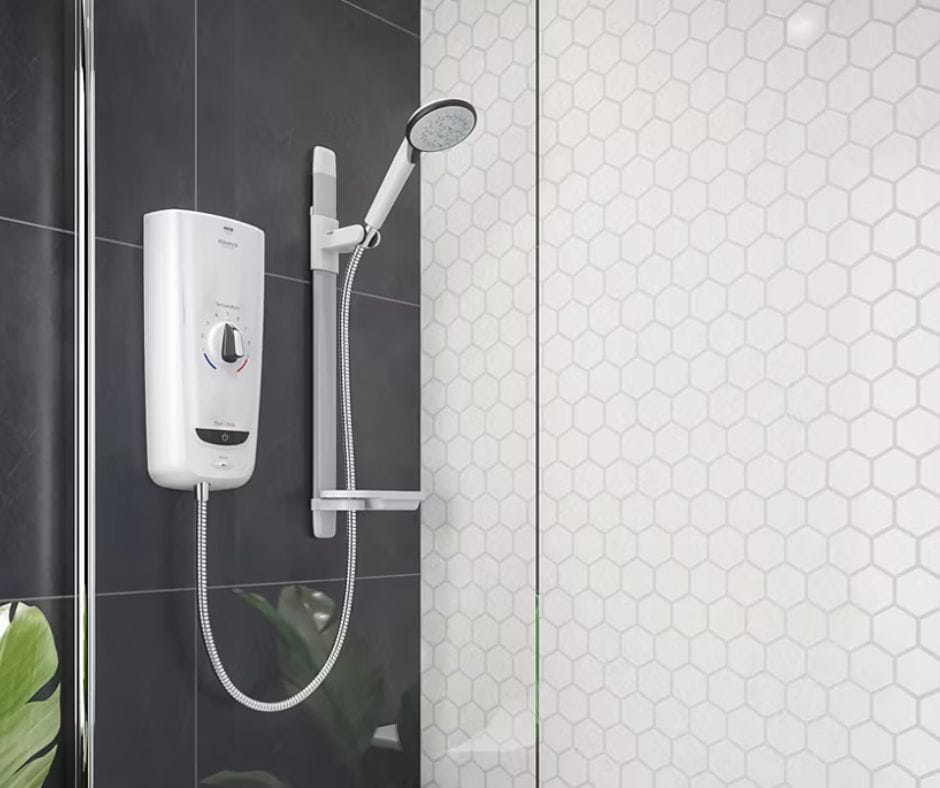
The introduction of the Mira Heatloop electric shower, designed to work compliantly with Recoup WWHRS technologies, creates a new opportunity to improve shower efficiency further within social housing environments.
Combining Mira Heatloop with WWHRS technology
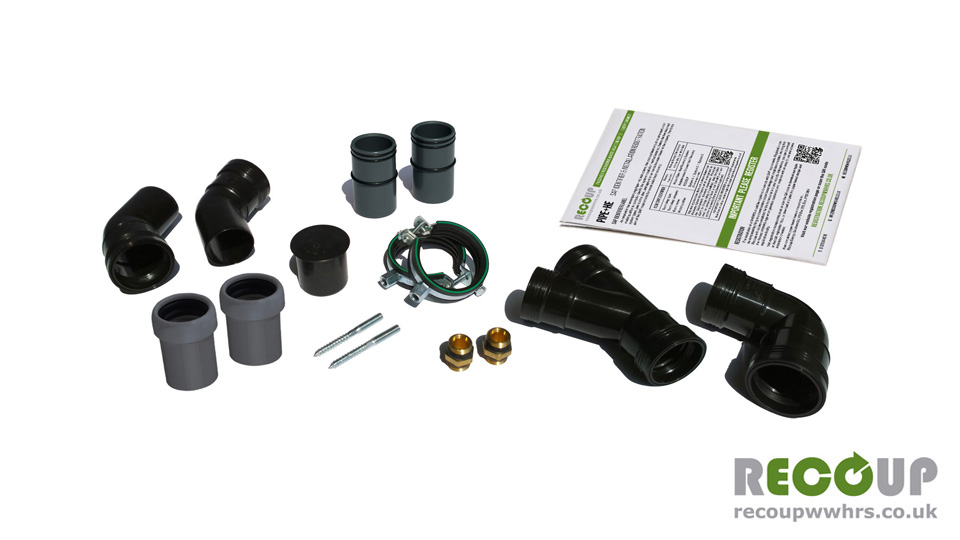
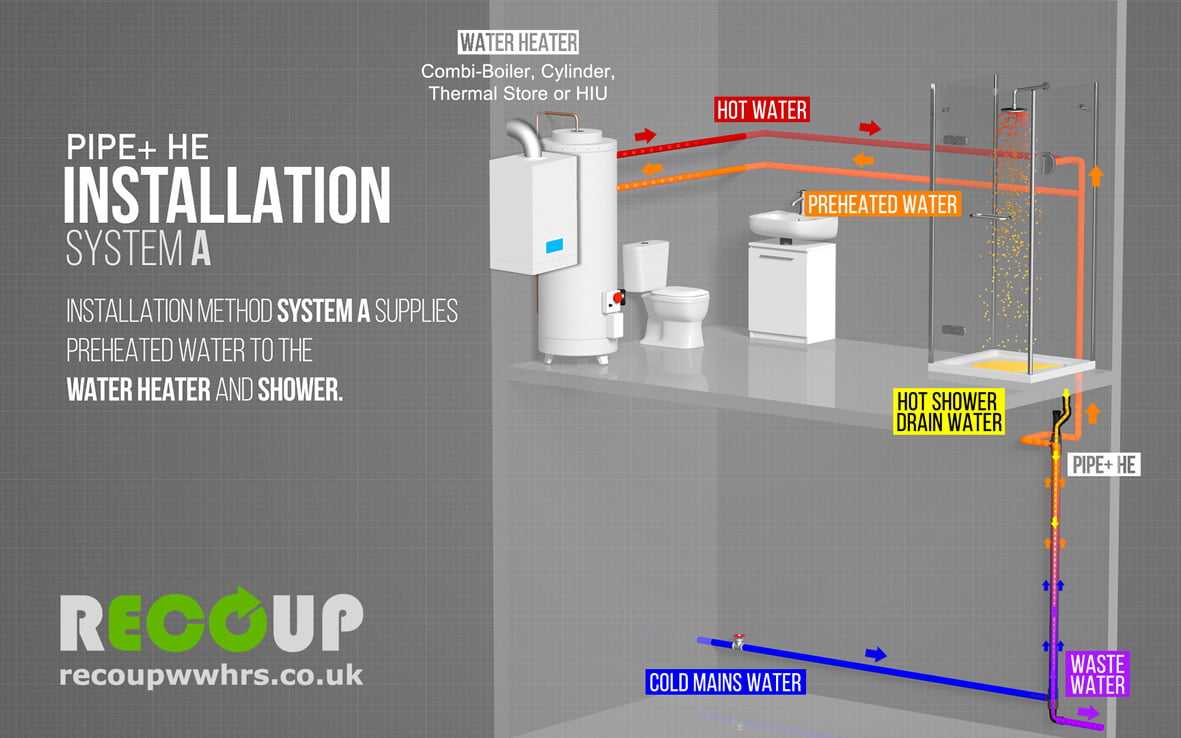
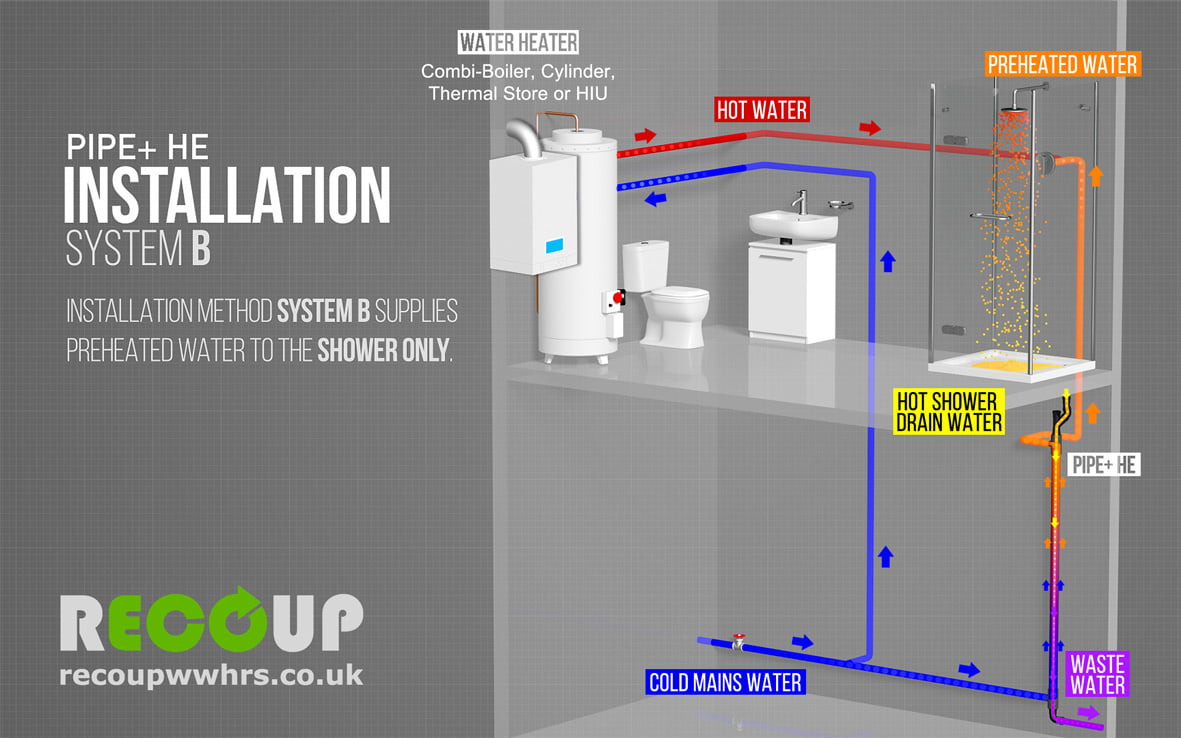
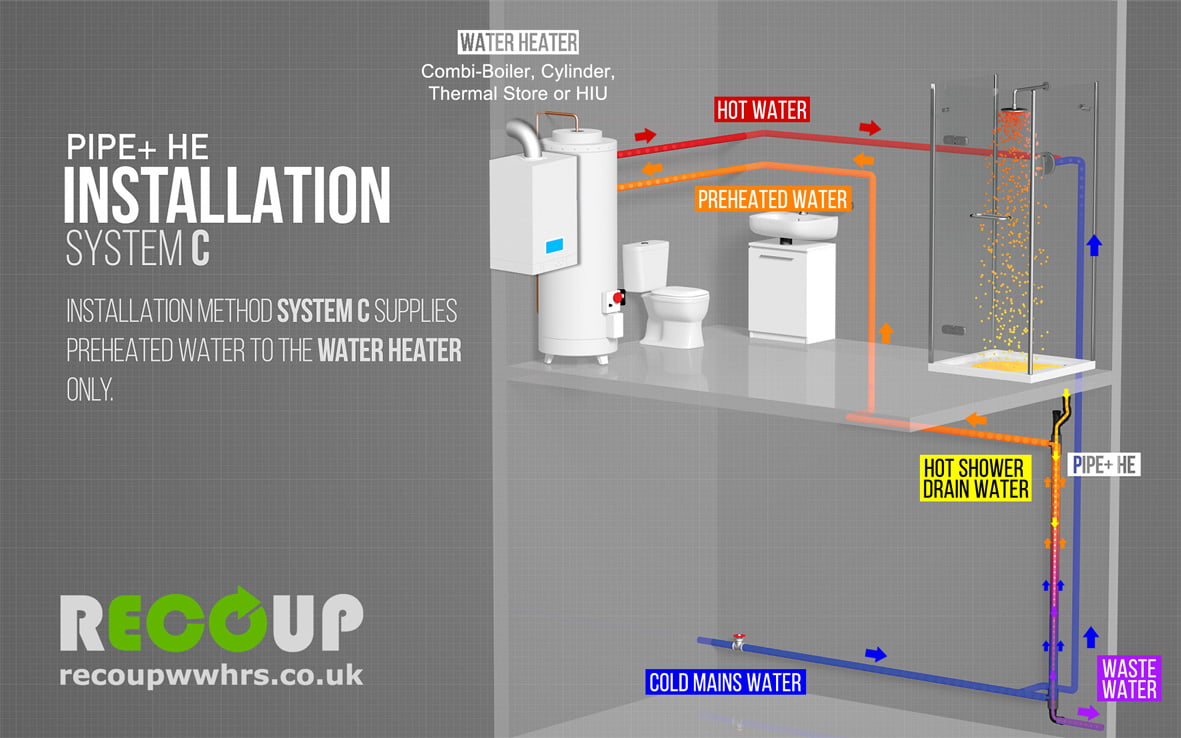
Waste Water Heat Recovery for Showers works by recovering heat energy from shower wastewater and transferring it into the incoming cold mains water supply. By preheating the incoming water before it enters the shower, WWHRS reduces the amount of electrical energy required to reach the desired showering temperature.
With up to 90% of shower heat energy typically lost down the drain, recovering even a portion of that wasted energy can have a meaningful impact on household energy demand and running costs.
The Mira Advance Heatloop electric shower has been specifically developed to work compliantly with compatible WWHRS systems, helping reduce energy demand while maintaining consistent shower performance.
Importantly, the process is entirely passive.
The systems operate automatically in the background with:
- No user interaction
- No controls
- No apps
- No changes to resident behaviour
- Minimal maintenance requirements
That simplicity is particularly valuable within social housing, where technologies need to deliver reliable real-world performance across large and varied housing stock.
A practical route to lower hot water demand
As the pressure to decarbonise housing continues to grow, there is increasing recognition that reducing energy demand must sit alongside low-carbon energy generation.
For social housing providers, practical technologies that can reduce hot water demand without creating additional complexity for residents may become increasingly important.
Efficient electric showers connected to WWHRS technologies offer a scalable and potentially lower-disruption approach for certain property types, particularly where traditional low-carbon heating strategies may be more difficult to implement. And as domestic hot water becomes a larger proportion of household energy demand, improving shower efficiency could play a much bigger role in future housing performance than many currently realise.