Waste Water Heat Recovery for Showers
Water shortages put water and energy efficiency in focus
The UK’s latest period of hot, dry weather has once again brought water resilience into sharp focus, reinforcing the need to reduce demand on both water and the energy used to heat it.
But achieving meaningful, long-term reductions cannot rely on households simply being asked to use less. A growing body of research suggests that homes, products and systems need to be designed so that greater efficiency happens naturally, with minimal intervention from occupants.
This is particularly relevant in the bathroom, where water and energy use are closely connected. Every litre of hot water saved reduces both water consumption and the energy required to heat it. At the same time, technologies such as Waste Water Heat Recovery for Showers (WWHRS) can reduce the energy associated with the hot water we continue to use.
Together, these approaches point towards a more joined-up way of thinking about future homes: reducing water demand where possible, using hot water more efficiently and recovering energy that would otherwise be wasted.
Why behaviour change alone is not enough
Research from the University of Surrey’s Water Efficiency ARC Lab has explored how behaviour influences domestic water use and what needs to happen next to improve water efficiency in UK homes. One of the key messages is that awareness campaigns and messaging alone are unlikely to deliver the scale of long-term reductions in water consumption required.
Many high-volume water-using activities are deeply habitual. Showering, bathing, flushing toilets and using bathroom taps are shaped by comfort, convenience and established routines rather than conscious decisions about efficiency. This creates a challenge for water and energy strategies that rely heavily on occupants actively changing their behaviour. Instead, the research highlights the role that products, controls, usability and design can play in making more efficient behaviour easier and more intuitive.
For the bathroom sector, this is particularly important because water and energy use are intrinsically linked. Reducing hot water demand not only conserves water but also reduces the energy required to heat it.
Moving towards a more joined-up approach
The need to tackle water and energy together is increasingly being recognised across the industry.
Kohler, Recoup’s parent company, is a member of the 50L Home Coalition, a global initiative bringing together businesses, policymakers and innovators to explore how households can enjoy a high quality of life while significantly reducing daily water consumption.
In the UK, this thinking is also being put into practice through the Ofwat Water Efficiency Lab, where the 50L Home Coalition is involved in a major pilot exploring innovative approaches to household water efficiency.
The principle is an important one: greater efficiency should not have to mean compromising the experience of living in a home.
For manufacturers, housebuilders and the wider building services sector, that means looking beyond individual products and considering how water consumption, hot water energy demand and user experience can work together as part of the overall design of a home.
This joined-up approach is particularly relevant as the industry prepares for increasingly demanding standards around the performance of new homes. WWHRS can make an important contribution to improving Part L performance by reducing the energy required for domestic hot water without requiring changes to occupant behaviour.
This joined-up thinking is also influencing product innovation across the wider Kohler group. Mira Showers’ Advance Heatloop™ combines an efficient electric shower with Recoup WWHRS technology, providing a practical example of how showering and heat recovery can work together as part of a more efficient system.
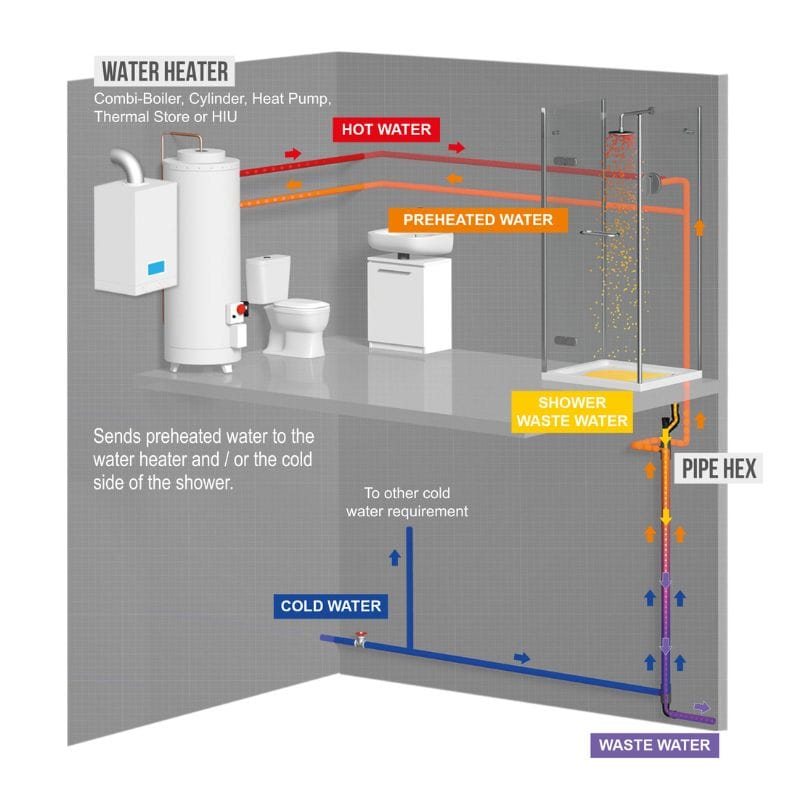
By recovering heat from shower wastewater and using it to preheat the incoming cold water, the system reduces the electrical energy required by the shower while maintaining the showering experience. Importantly, the energy saving happens automatically, without requiring the user to change how they shower.
The growing role of passive technologies like WWHRS
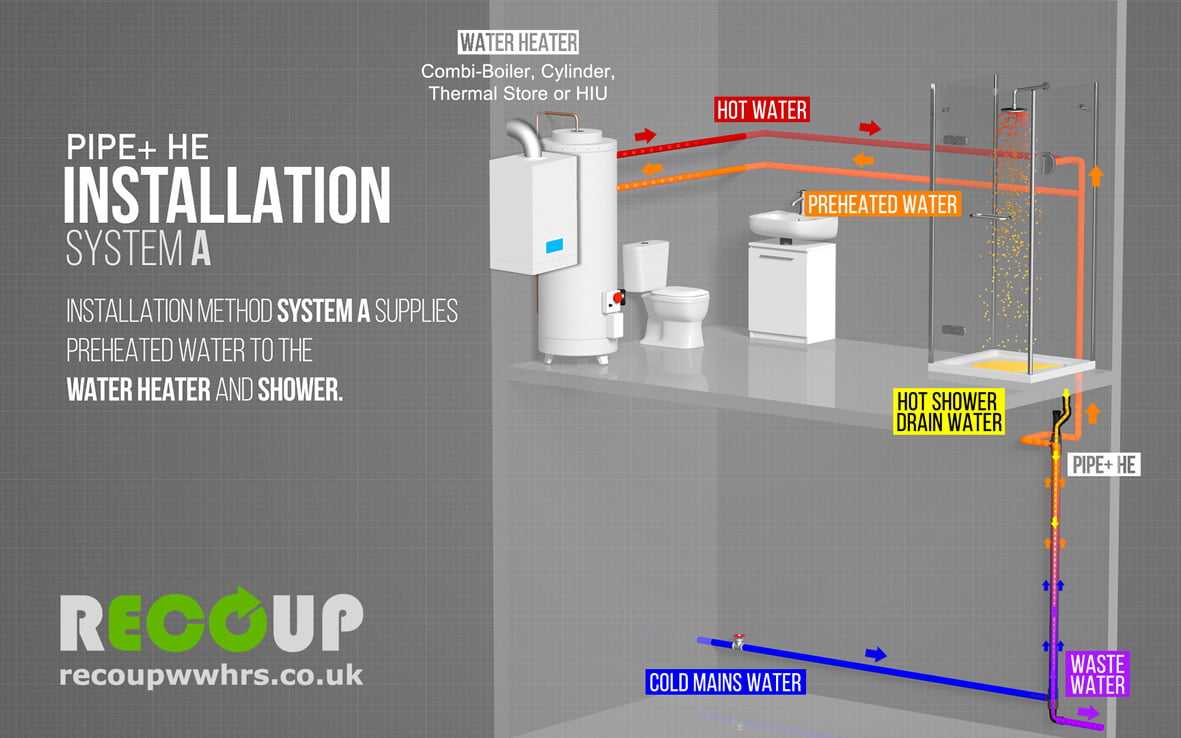
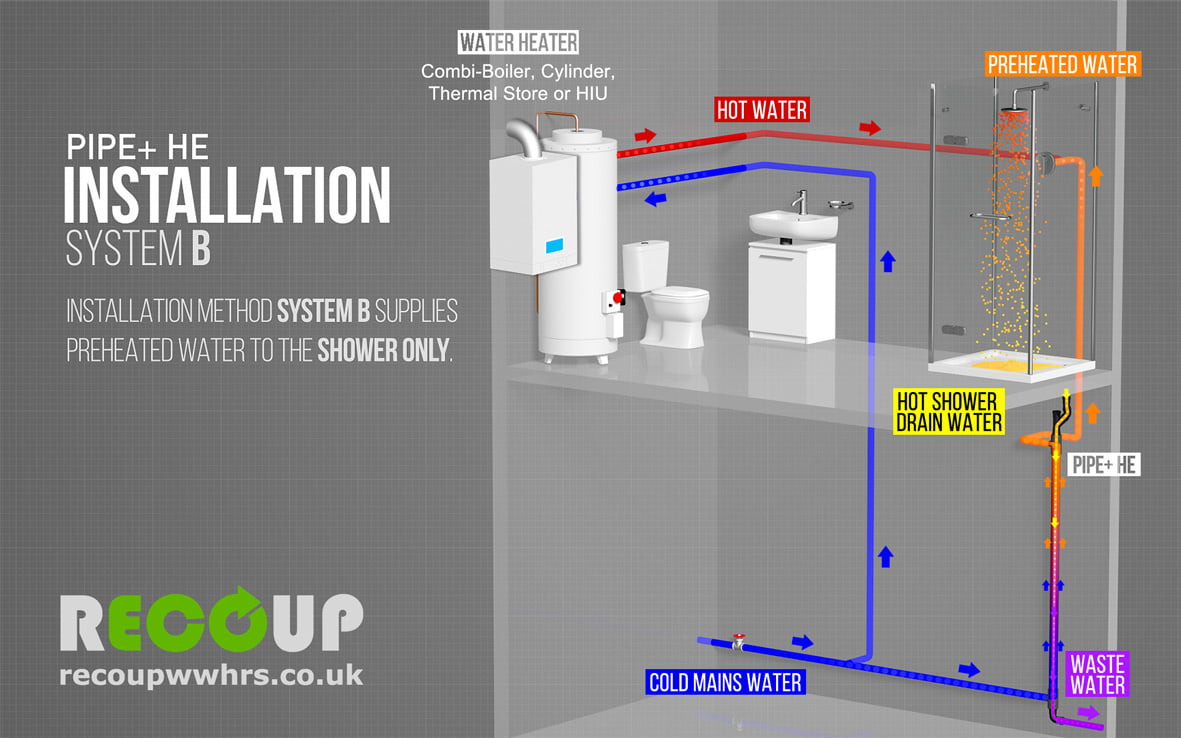
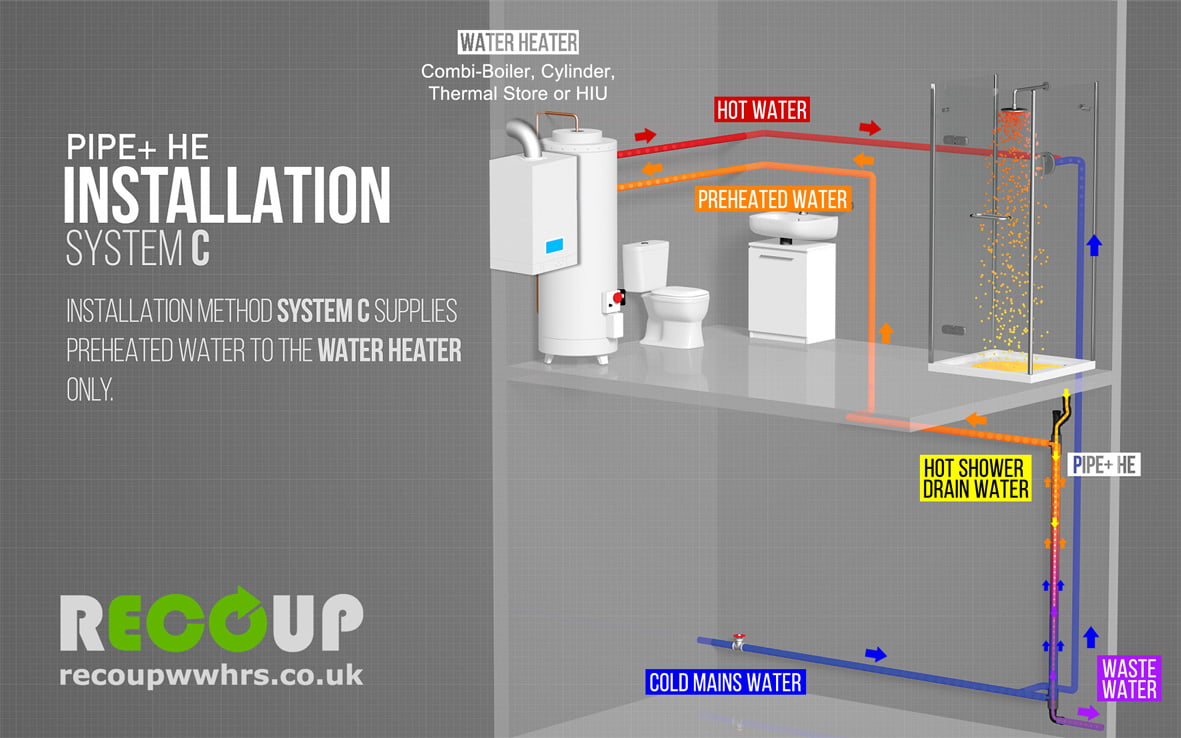
Waste Water Heat Recovery for Showers works by recovering heat energy from shower wastewater and transferring it to the incoming cold mains water supply, reducing the amount of energy required to produce hot water for showering.
Up to 90% of the energy used to heat shower water would otherwise be lost down the drain. WWHRS captures this waste heat and puts it back to use, delivering an energy saving whenever the shower is used. Crucially, it does this regardless of occupant behaviour.
Recoup WWHRS operates automatically, with no controls, no apps, no planned maintenance and no requirement for occupants to change their showering routine or interact with the technology. Different property types and applications require different approaches, which is why the Recoup WWHRS product range includes solutions for new-build and retrofit applications. That distinction is becoming increasingly important as homes become more energy efficient and domestic hot water accounts for a greater proportion of overall household energy demand.
While WWHRS does not reduce the volume of water being used, it complements water-saving measures by reducing the energy associated with the hot water that households continue to consume.
Designing efficiency into the home
The current pressure on UK water resources is another reminder that water efficiency cannot be considered in isolation. Reducing consumption matters, but so does reducing the energy associated with the hot water we use and preventing valuable heat from simply being wasted. Behaviour change will remain part of the solution, but there is a significant opportunity to make efficient living easier by design.
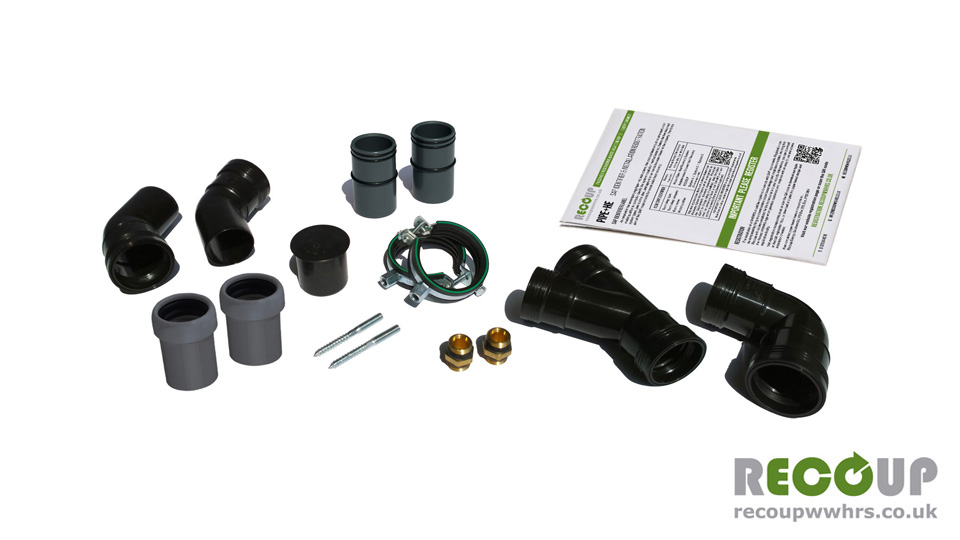
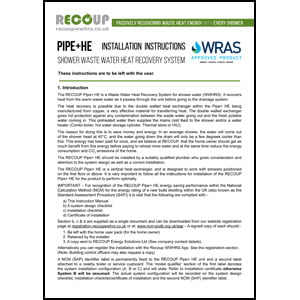
From water-efficient products and fittings to passive technologies such as Recoup’s Pipe HEX WWHRS, homes can increasingly be designed to use resources more intelligently without adding complexity for occupants or asking them to compromise on their everyday experience.
As pressure grows to deliver homes that are lower carbon, more water efficient and more resilient to future challenges, designing water and energy efficiency into the fabric and services of the home will become increasingly important.
Find out more about how Recoup Waste Water Heat Recovery Systems can reduce domestic hot water energy demand: Explore Recoup WWHRS solutions