Waste Water Heat Recovery for Showers
Research Reveals Misconceptions About Waste Water Heat Recovery
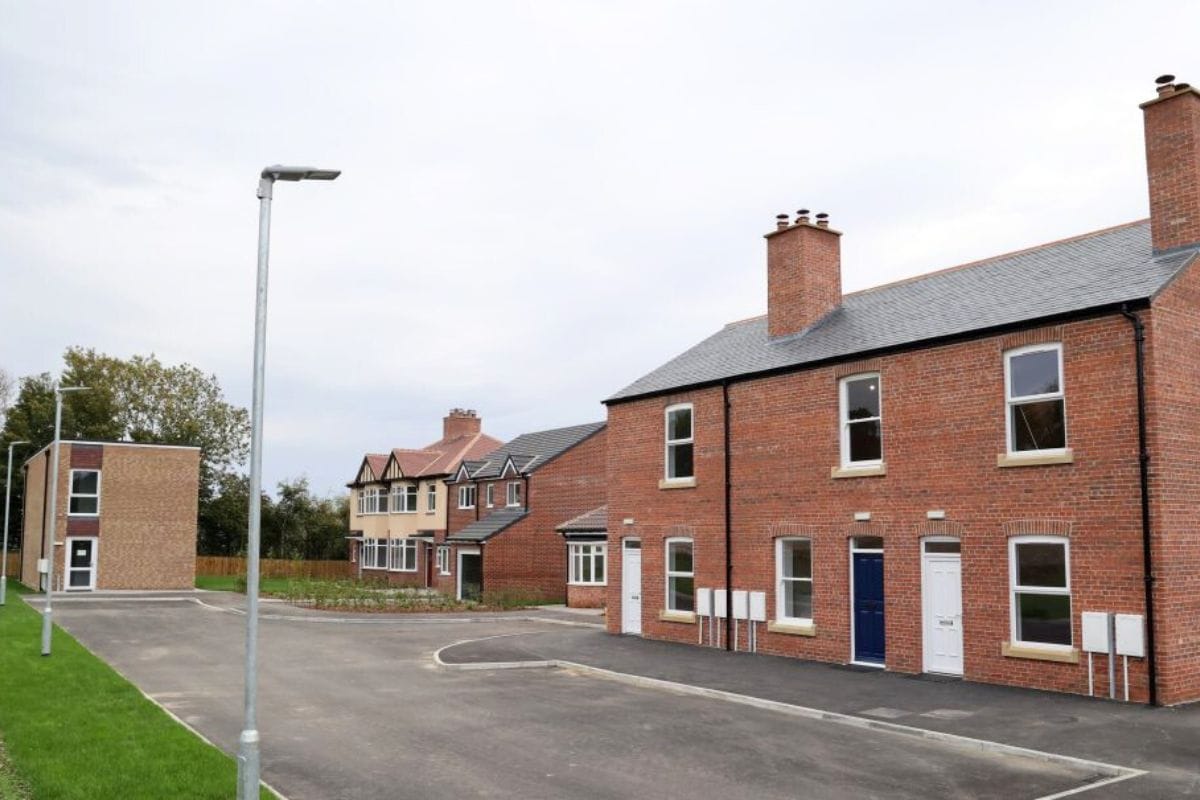
Recent research from the NeRV Energy Village project, sheds light on how households perceive retrofitted energy-saving technologies, including Waste Water Heat Recovery for Showers (WWHRS).
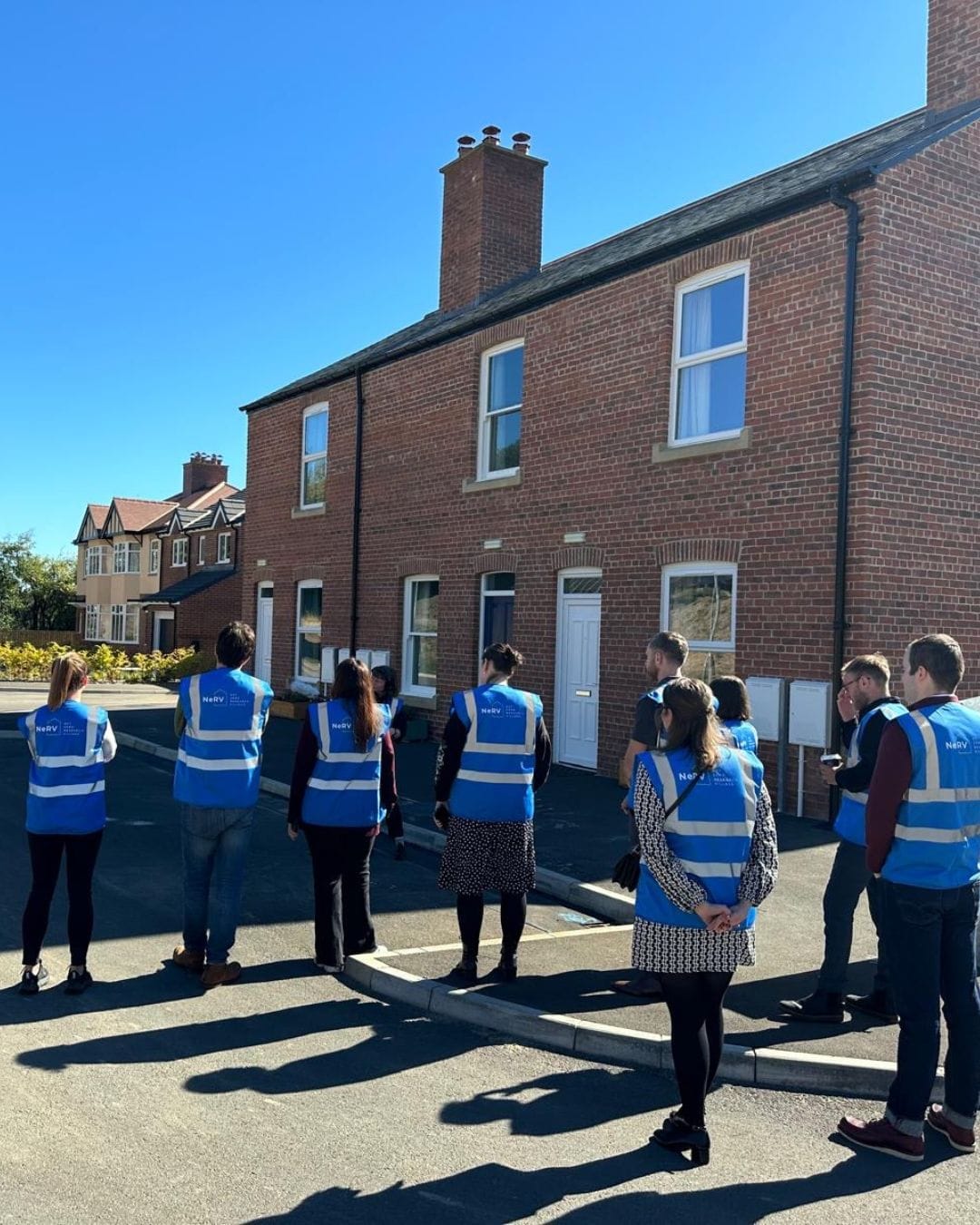
The NeRV (Net Zero Energy Village) project is a collaborative initiative led by Newcastle University, bringing together industry partners to explore how low-carbon technologies perform in real homes. Based in a live test environment of retrofitted properties, the project combines technical monitoring with resident feedback to better understand both the measured performance of solutions and how they are experienced by occupants. Its aim is to support the scaling of retrofit by identifying practical, effective approaches to improving energy efficiency across existing housing stock. Read the full case study Scaling Retrofit for Net Zero: The Role of WWHRS at NeRV for more information.
This real-world setting provides valuable insight into both performance and perception in practice.
Drawing on both resident feedback and in-house testing, the findings highlight a clear trend seen across the housing sector: WWHRS is proven to reduce energy demand, but awareness, understanding and perception still influence adoption.
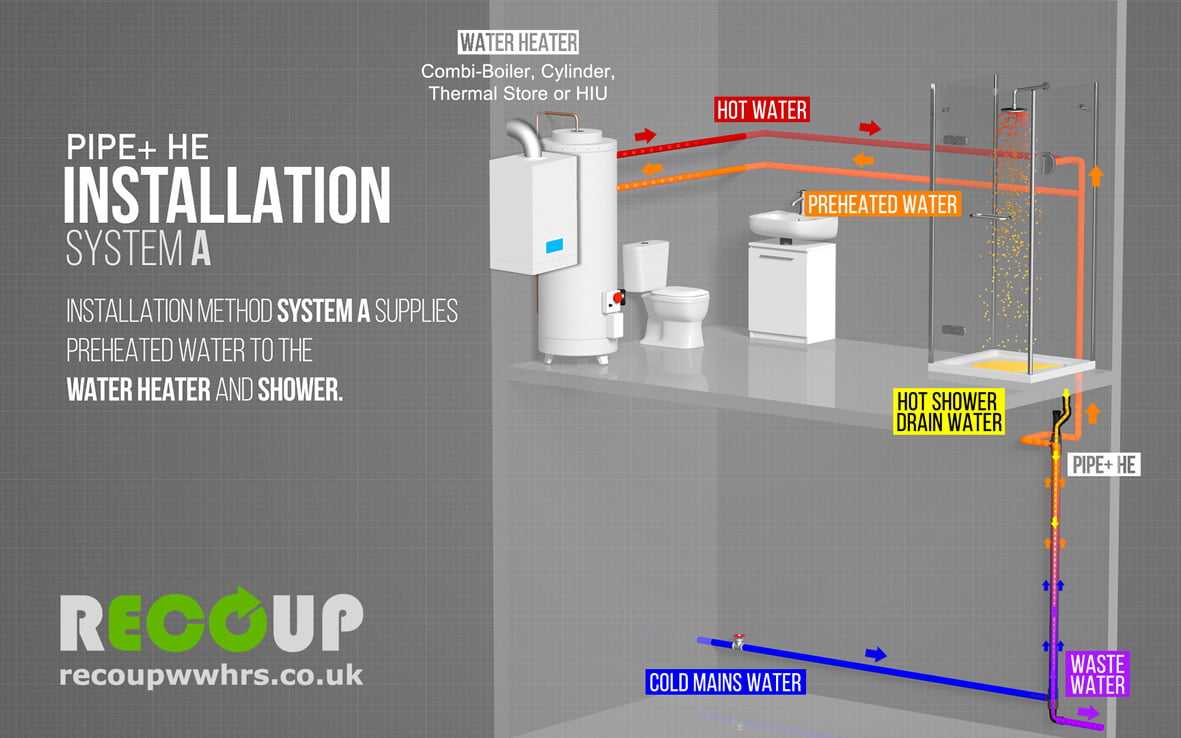
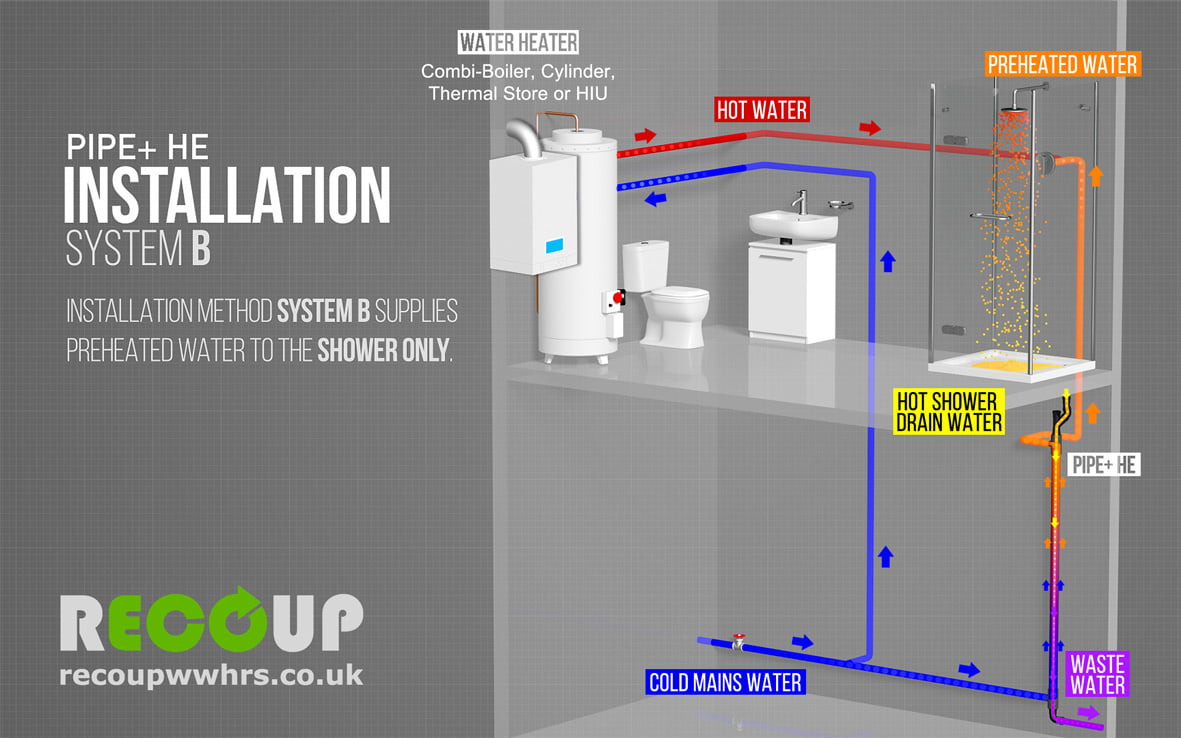
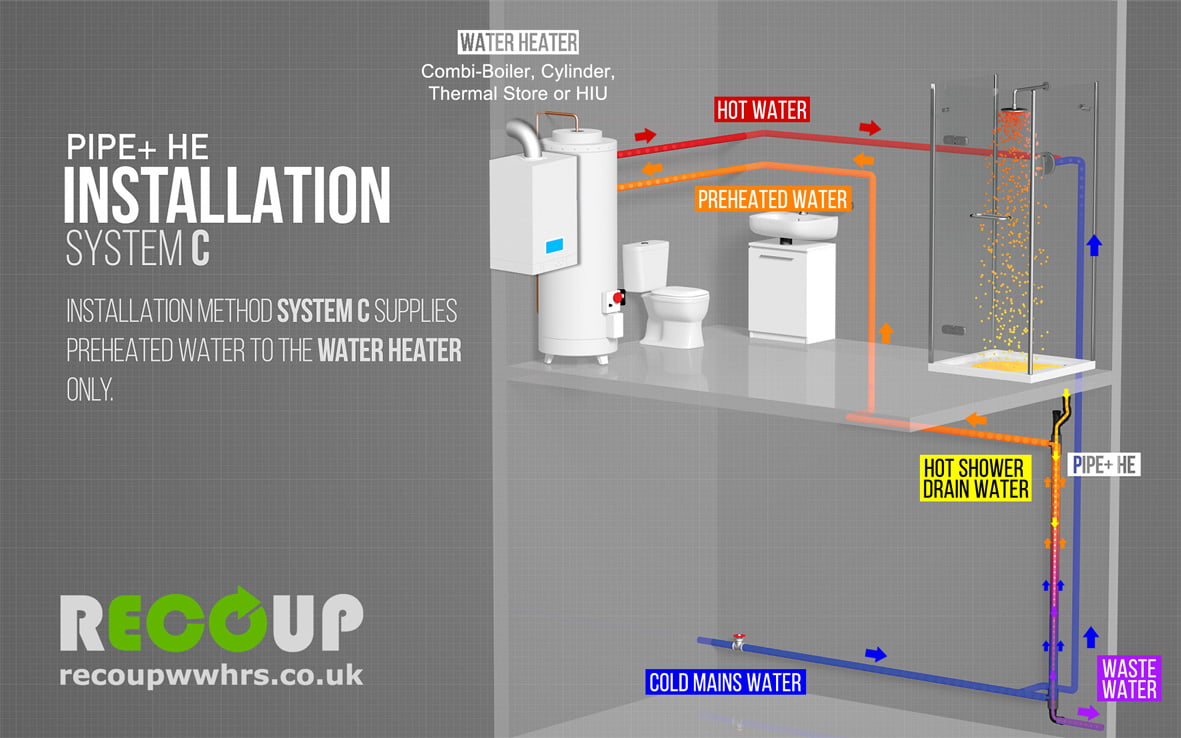
The research found that while many participants liked the concept of recovering heat from shower waste water, their initial understanding was often limited and perceived to be complex. Some assumed the dirty water was being reused, rather than heat being transferred from it, a common misconception for the technology that typically sits unseen behind the wall, or hidden below a bath.
“It absorbs heat somehow… I don’t really know where it goes.”
However, once explained or demonstrated, perceptions changed quickly. Participants described the system as a “good idea” and, in some cases, “amazing”. This is a very common reaction; once explained, the simplicity shines through often with the comment of “why don’t we have that in all homes?”.
The takeaway is simple: when WWHRS is understood, its value is immediately recognised.
Where WWHRS Delivers the Greatest Impact
The research confirmed that WWHRS delivers the greatest benefit in homes with higher hot water demand, particularly in family households or multi-occupancy homes.
This aligns with how WWHRS is already being specified across new-build residential developments, affordable and social housing schemes and other high-occupancy settings. As homes become more fabric-efficient and space heating demand reduces, domestic hot water is becoming a larger share of total energy use. Making further savings here has a direct impact on the occupants as well as further improving the home’s performance.
While the level of benefit will vary depending on usage patterns, this reflects a broader principle seen across energy efficiency measures. Systems deliver the greatest impact where demand is highest. However, WWHRS will always provide savings; even low occupancy housing will make savings over a period of time. With Recoup products providing no planned maintenance requirements and a long lifecycle, the property will benefit from this improved performance with all occupancy after installation.
“Waste water heat recovery for showers is a very simple technology; all product types work in the same way, but the performance and efficiency changes due to physical constraints in certain scenarios,” said Ellis Maginn, Head of Technical & Specification for Recoup. “Greater and faster savings will always be gained in bigger households. The more a shower with WWHR is used, the more energy and cost it saves. But the overall performance and energy-saving capabilities of the property as a whole are important to consider. Hot water use in showers is an easy area to tackle by including or retrofitting a WWHRS system with the shower.”
Delivering WWHRS in Real Homes
Concerns around installation, disruption and system complexity were a consistent theme within the research. With one participant stating, “That sounds like a lot of disruption.”
In many cases, this reflects the challenges associated with retrofit, where any additional work can feel intrusive. The research also highlighted that timing plays a key role, with participants far more open to installation when already planning bathroom refurbishment, compared to retrofitting into newly completed spaces.
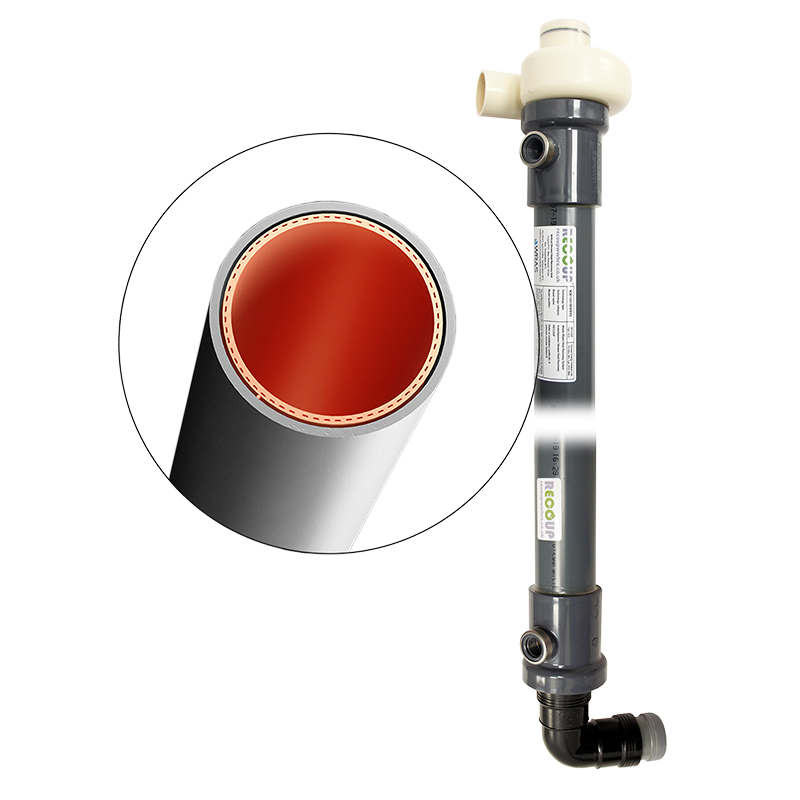
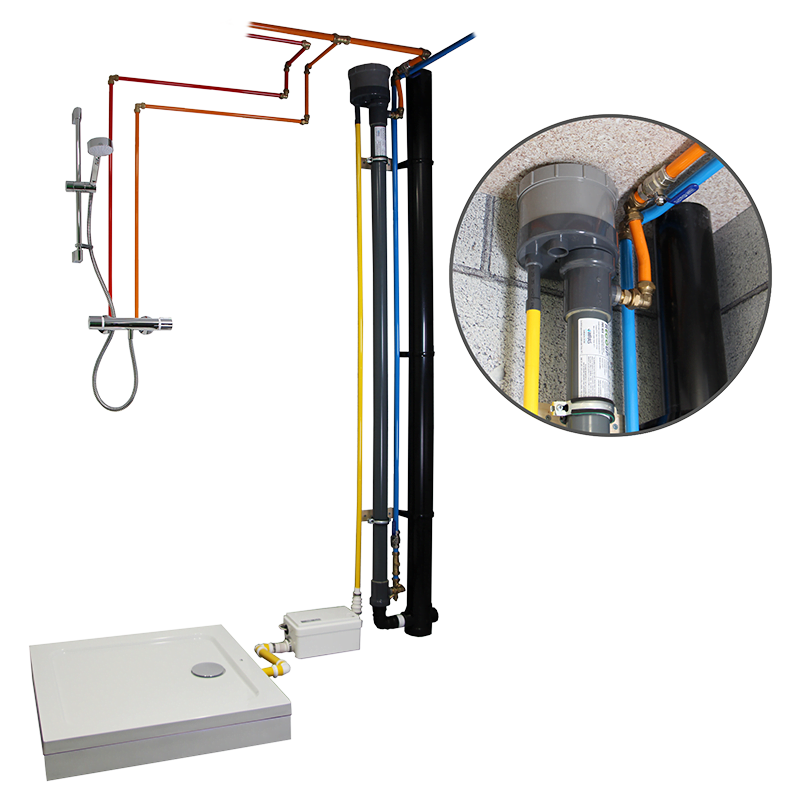
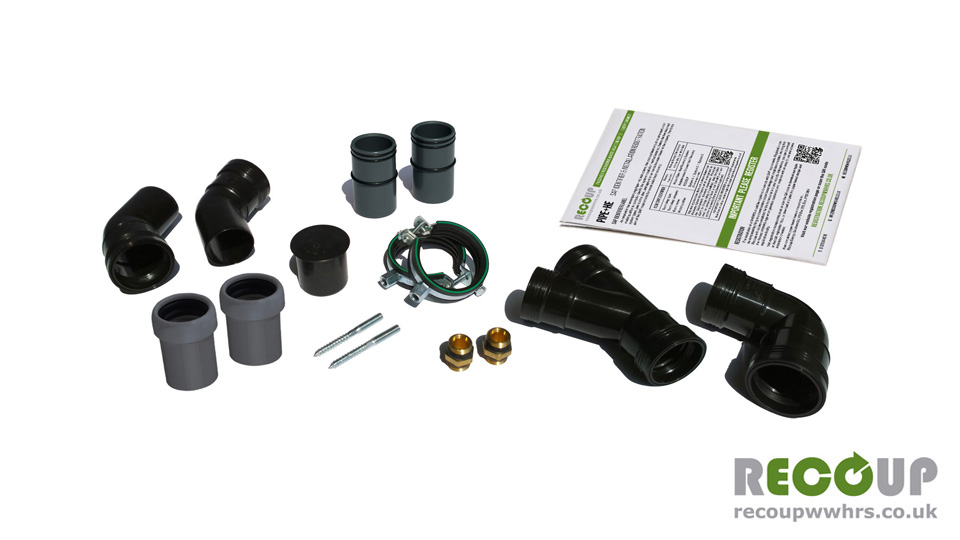
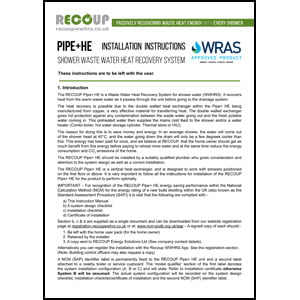
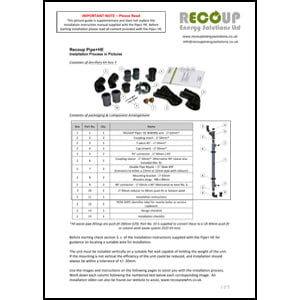
In practice, however, WWHRS is already widely installed in new-build homes, where it can be integrated seamlessly during construction. The vertical Recoup Pipe HEX, installed below the shower, is more intrusive and fitted outside of the bathroom, making it more suited to new build or bigger renovations.
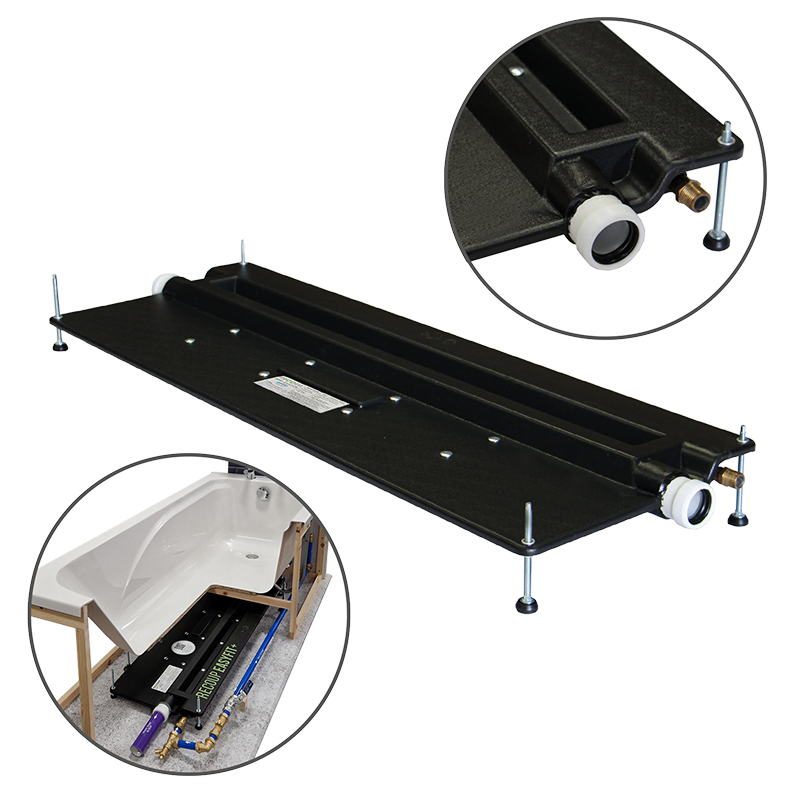
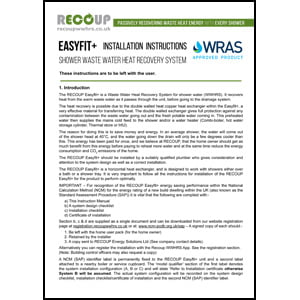
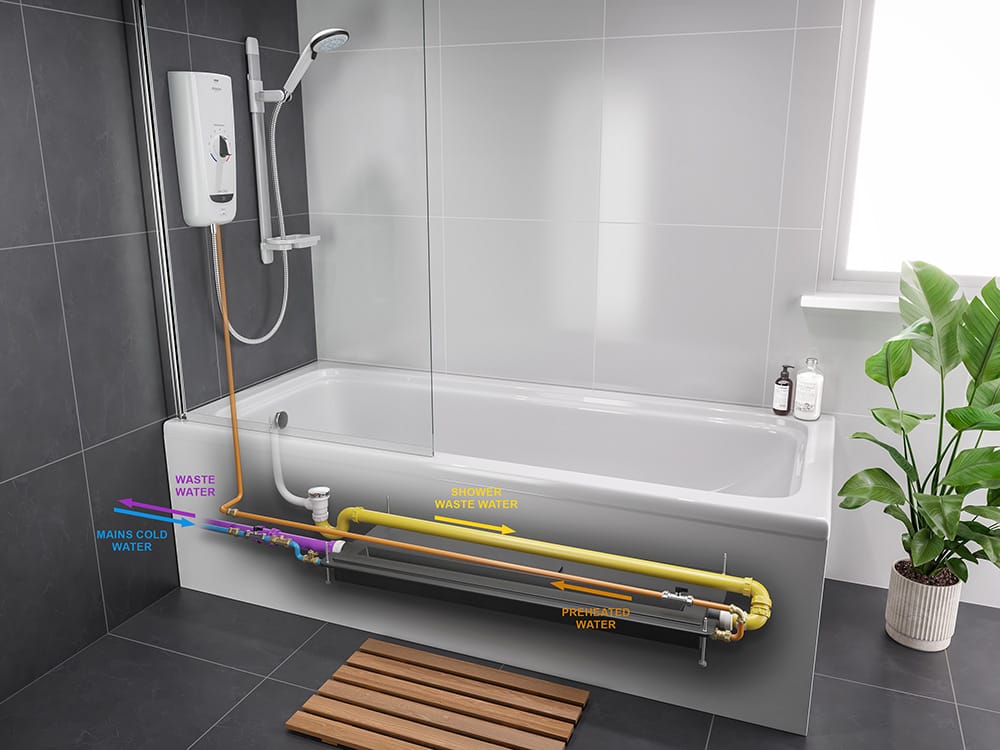
Systems such as Recoup Easyfit+ under-bath WWHRS, designed to fit within standard plumbing layouts and spaces, are much easier to retrofit than they appear. With very minimal time and interruption to the homeowner.
The Pipe HEX Active, with its pump addition, is a way to provide the high efficiency Pipe HEX on the same floor as the shower and is more retrofit-friendly with suitable space. But the addition of the pump does then add to the perceived complexity of the system.
As the market has matured, system design has evolved to reflect real-world constraints. Recoup now provides a wider range of solutions to suit different layouts and property types, helping to overcome some of the structural barriers identified in earlier perceptions.
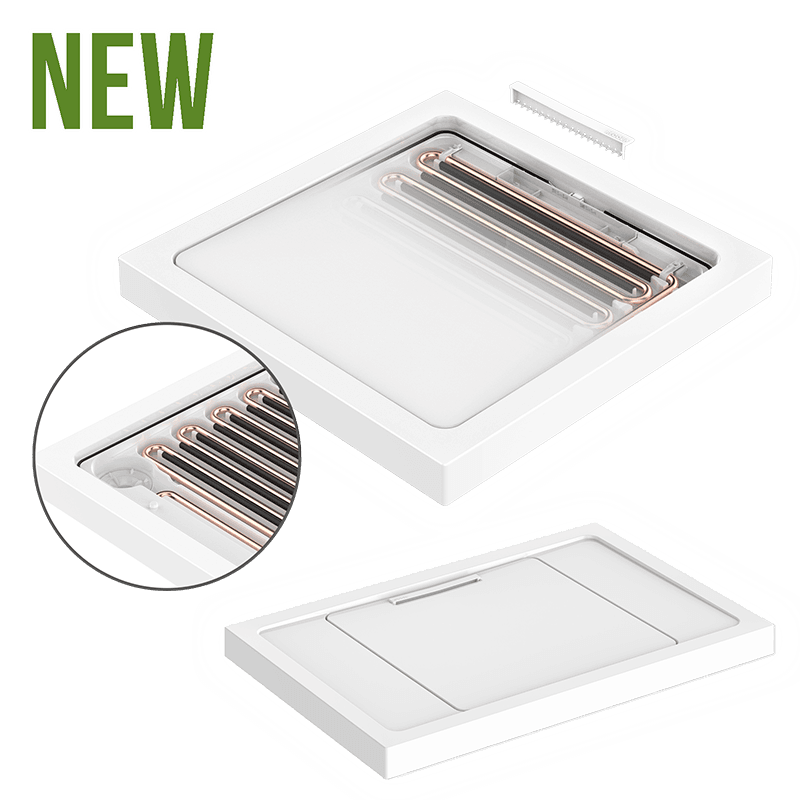
More recently, innovations such as Recoup’s HeatDeck™ WWHRS shower tray have been developed to address space and layout limitations, integrating heat recovery directly within the shower tray. This is an alternative to the vertical pipe and provides a solution where WWHRS installation may not be feasible. As a shower tray, it can simply replace the existing tray product to provide an integrated saving solution.
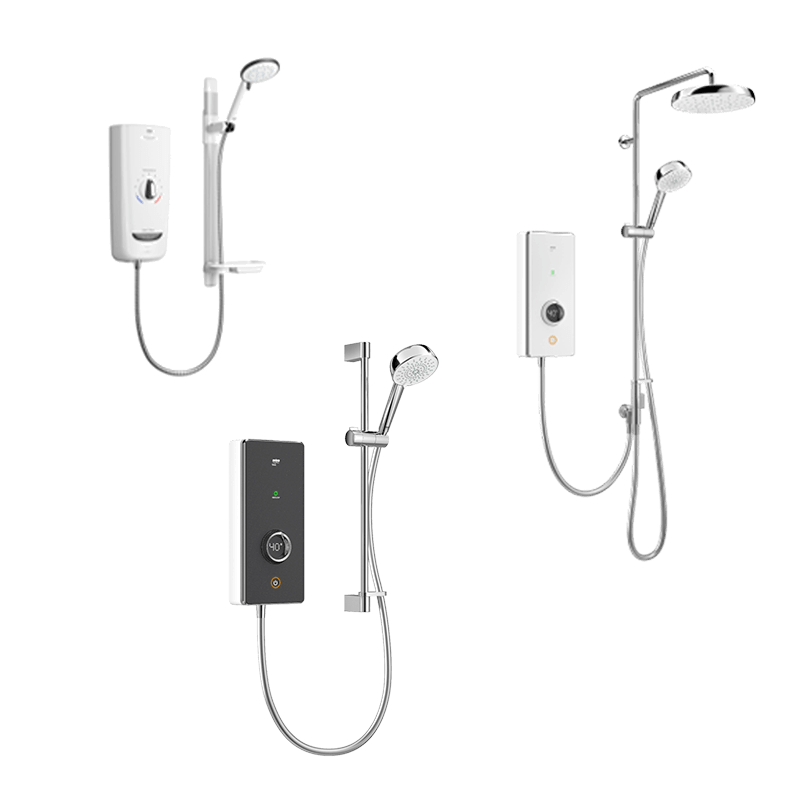
Added to this is the Mira Heatloop™ electric shower, which is compatible with all Recoup WWHRS. Before this product was released waste water heat recovery systems could not be used with an electric shower.
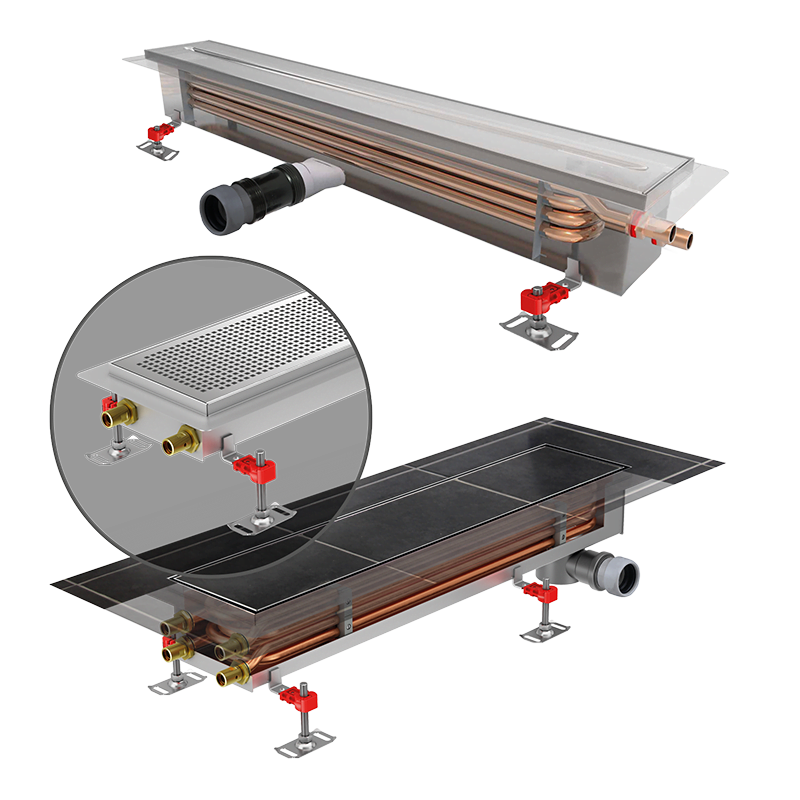
Across all key WWHRS types, the use of passive heat exchange technology, with no moving parts, no planned maintenance, no user interaction, and no change to use. All helps address concerns around reliability, maintenance and noise, reinforcing the simplicity of the system.
Proven Performance and Long-Term Value
Alongside user feedback, the project also provided measured performance data, reinforcing the effectiveness of WWHRS in real-world conditions.
Testing of a retrofitted Recoup Easyfit+ demonstrated a 32% reduction in energy use during a typical shower, with 0.49 kWh of heat recovered per use and a corresponding reduction in running costs over time. This reinforced the specification data of the product, showing its true performance capability in a real-world location.
WWHRS is already SAP-listed, supports Part L compliance and is being used by developers to help meet emerging Future Homes Standard requirements. It is increasingly recognised as a cost-effective way to reduce hot water energy demand at source, rather than relying solely on additional energy generation. This project shows how retrofitting WWHRS products to existing properties can also apply these benefits to existing homes. Applying the same levels of impact to the EPC scores for old properties as well as new.
Perception, Trust and the Role of WWHRS in Homes in the Future
The direction of UK housing is evolving with the Future Homes Standard targeting significant reductions in carbon emissions for new homes. The focus is shifting beyond fabric efficiency and towards how all energy is used within the home. As space heating demand falls, hot water is becoming one of the largest remaining energy loads. What is true for new homes is also true for existing properties, but there is a lot more catching up to do for our existing housing stock.
For both new and old homes, WWHRS can easily address hot water energy demand for showering. By recovering the heat that would otherwise be lost, reducing the energy required to produce hot water and supporting decarbonisation for all homes across all sectors.
The NeRV Energy Village research reinforces a clear direction of travel. The technology is proven, the energy savings are measurable, and acceptance grows quickly once the system is understood. But the perceptions and understanding of the homeowners and occupants need to be considered along the way.
Some participants expressed concerns around reliability and potential issues, reflecting a broader hesitation often associated with newer or less visible technologies. One comment included, “I just see floods everywhere!” specifically in relation to the vertical pipe. In reality, WWHRS construction and installation are based on the same standard plumbing and drainage materials and infrastructure that are embedded into the walls and ceilings of all modern homes.
Other questions around compatibility with different shower types, layouts and maintenance highlight the importance of clear information and guidance at the point of design and installation. Although once installed, WWHRS is essentially a fit and forget technology.
The research also pointed to the importance of trust and familiarity, with participants expressing greater confidence when technologies were associated with established, recognisable brands, such as Recoup’s parent company, Mira Showers.
As the Future Homes Standard continues to shape how homes are designed and built, and social housing providers and home owners look to improve the performance of existing properties, the opportunity and aim are clear: to move Waste Water Heat Recovery for Showers from a considered option to a standard part of delivering any energy-efficient decarbonised home.
To learn more about how Recoup WWHRS can benefit your development, get in touch by email at info@recoup.co.uk or call us on 01379 844010.
More Case studies
Waste Water Heat Recovery for Showers Social Housing Retrofit
Waste Water Heat Recovery for ShowersProject: Goldthorns, Colwyn BayHousing Provider: ClwydAlynMerchant Partner: Harley & ClarkeInstaller: Margden Plumbing & HeatingSector: Social Housing | Retrofit / RefurbishmentProducts: Recoup Pipe HEX, Easyfit+ and Mira...

Gilden Park Sports Pavilion, Harlow
Waste Water Heat Recovery for ShowersBuilding Greener Leisure Spaces with WWHRS Technology At the new Gilden Park Sports Pavilion in Harlow, Recoup’s Drain+ Duo HE Waste Water Heat Recovery Systems (WWHRS) are turning everyday showers into a source of energy...
The Micro House Scotland Project
Waste Water Heat Recovery for ShowersMicro House Scotland is a pioneering self-build project by scientist and engineer Neil, who set out to prove that small-scale building doesn’t have to mean compromising on comfort or performance. His vision was to create a highly...