Waste Water Heat Recovery for Showers
Waste Water Heat Recovery for Showers Social Housing Retrofit
Project: Goldthorns, Colwyn Bay
Housing Provider: ClwydAlyn
Merchant Partner: Harley & Clarke
Installer: Margden Plumbing & Heating
Sector: Social Housing | Retrofit / Refurbishment
Products: Recoup Pipe HEX, Easyfit+ and Mira Advance Heatloop™
Goldthorns, Colwyn Bay Project Overview
As part of ongoing upgrade works to its existing housing stock, ClwydAlyn Housing identified Waste Water Heat Recovery for Showers (WWHRS) as an opportunity to improve energy efficiency at Goldthorns, an existing residential property on Abergele Road in Colwyn Bay.
The wider project involves the full refurbishment of three flats and a maisonette within a building dating back to the early 1900s, each with a bathroom featuring a bath with an over-bath shower. The installation began with two flats during the initial phase, providing an opportunity to incorporate and assess WWHRS as part of the wider refurbishment programme.
Recoup WWHRS technology was supplied through merchant partner Harley & Clarke, with installation carried out by Margden Plumbing & Heating.
The project provides a practical example of how WWHRS can be incorporated into the refurbishment of existing social housing, helping to reduce the energy required for hot shower water by recovering heat that would otherwise be lost down the drain.
This is increasingly relevant as housing providers across Wales work to improve the energy performance of existing stock. The Welsh Housing Quality Standard (WHQS 2023) places increased emphasis on affordable warmth, energy efficiency and decarbonisation, with an interim requirement for social homes to achieve a minimum SAP 75 / EPC C by 31 March 2030.
Meeting these ambitions will require a combination of measures appropriate to each property. While building fabric and heating improvements remain central to retrofit, reducing domestic hot water energy demand provides another opportunity to improve calculated dwelling performance.
WWHRS can support this wider approach by targeting an area of energy use that might otherwise be overlooked. By recovering heat from shower waste water, it reduces the energy required to provide hot water and can contribute positively to EPC scores, without relying on resident behaviour to deliver the benefit.
For housing providers, this makes WWHRS a practical additional measure to consider as part of the wider mix of technologies used to improve existing homes and work towards long-term energy efficiency and decarbonisation goals.
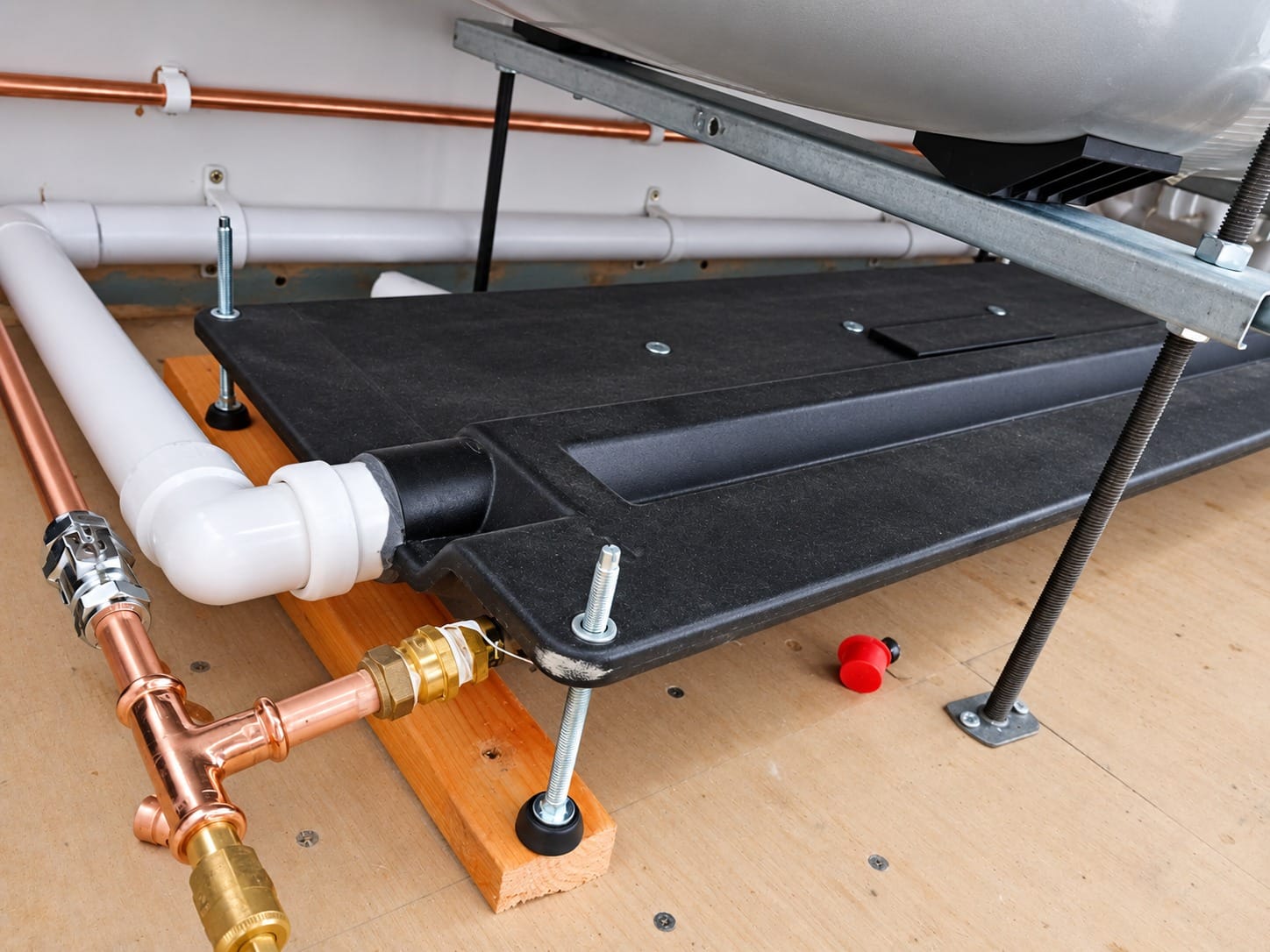
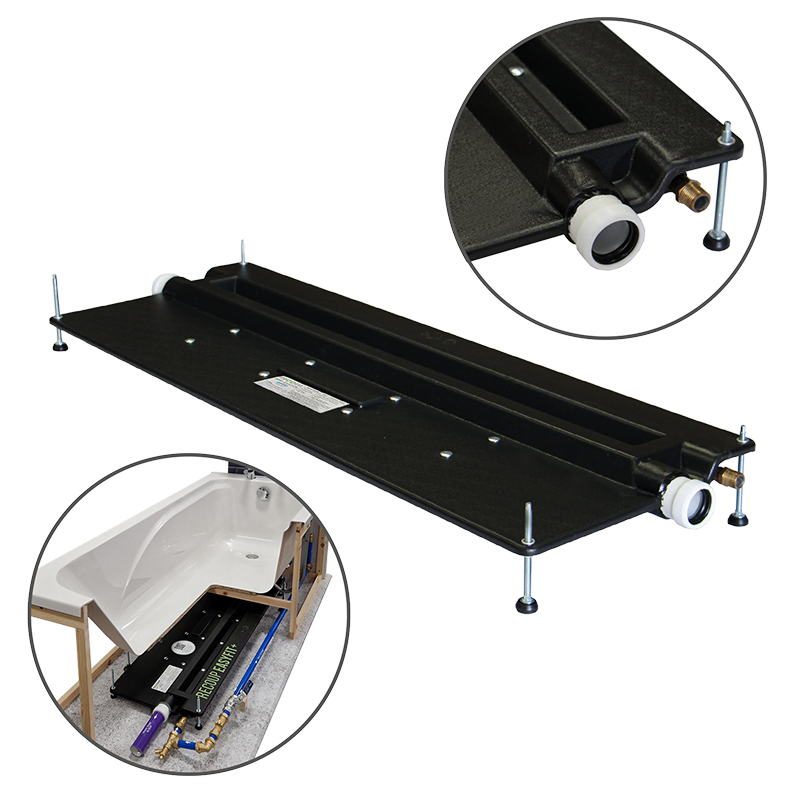
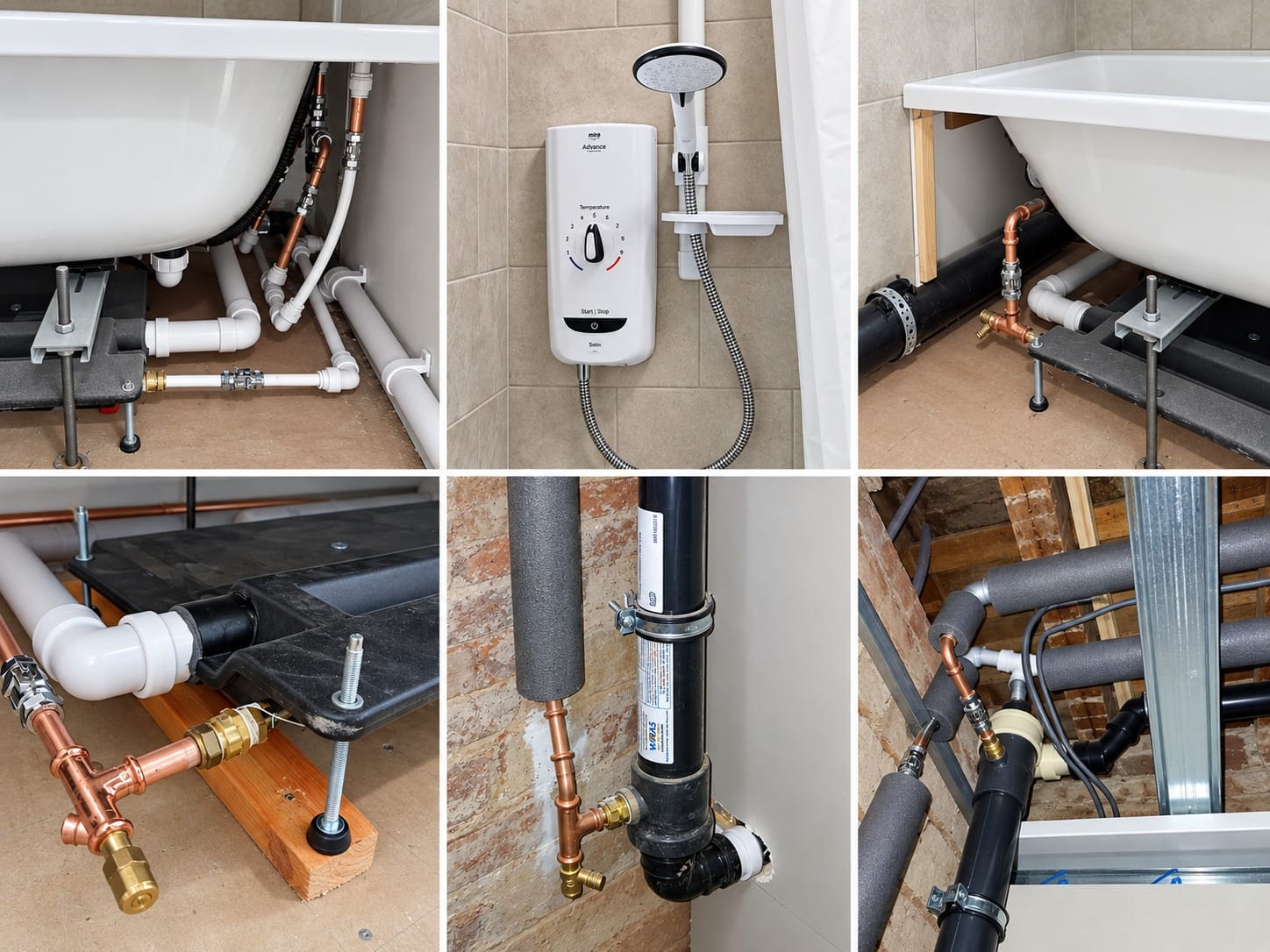
Easyfit+ WWHRS installed beneath the bath as part of the bathroom refurbishment
A Passive Approach to Hot Water Efficiency
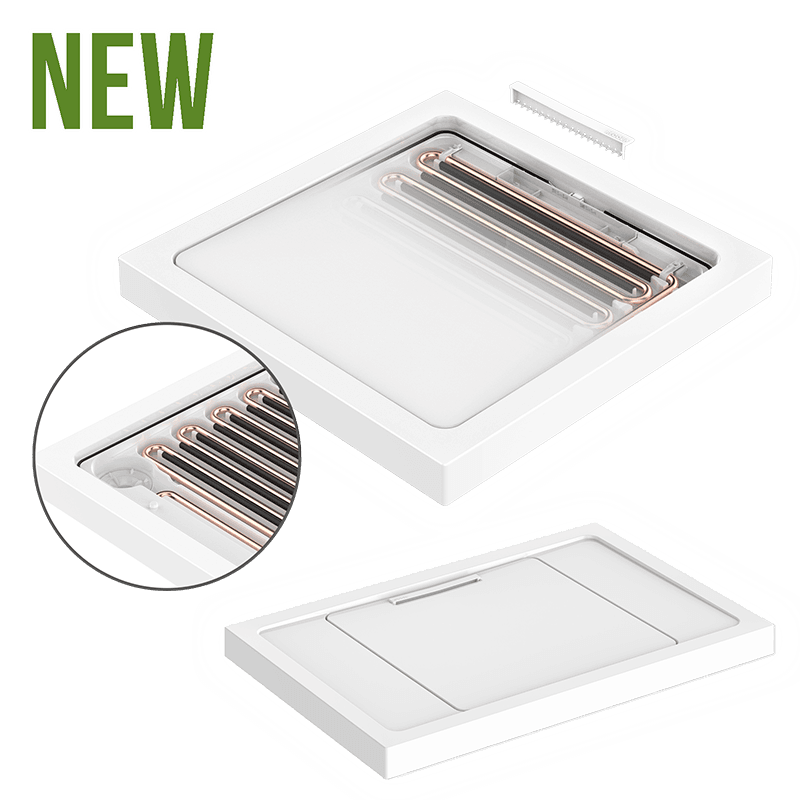
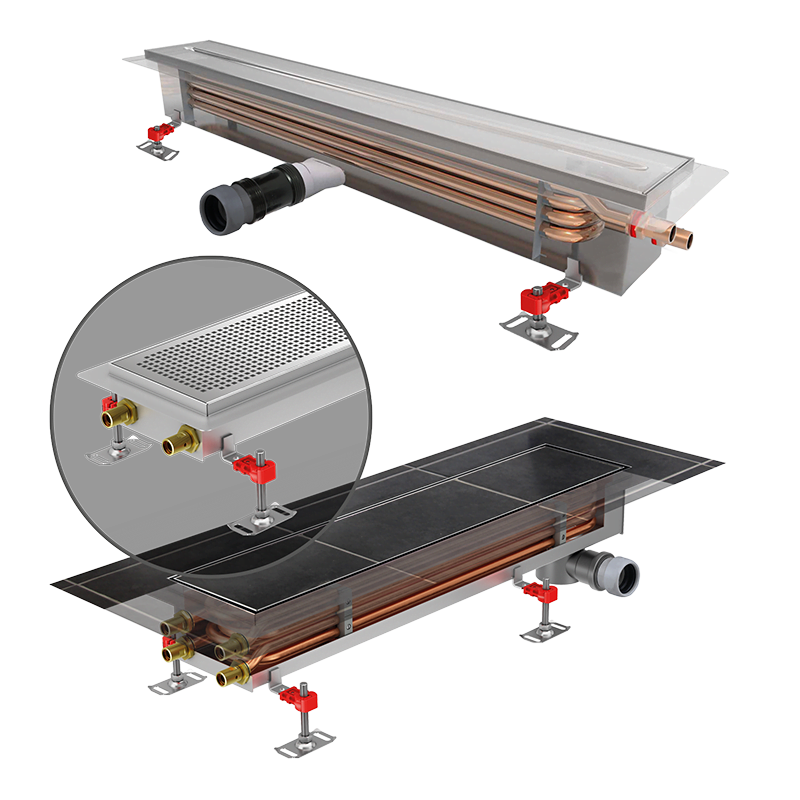
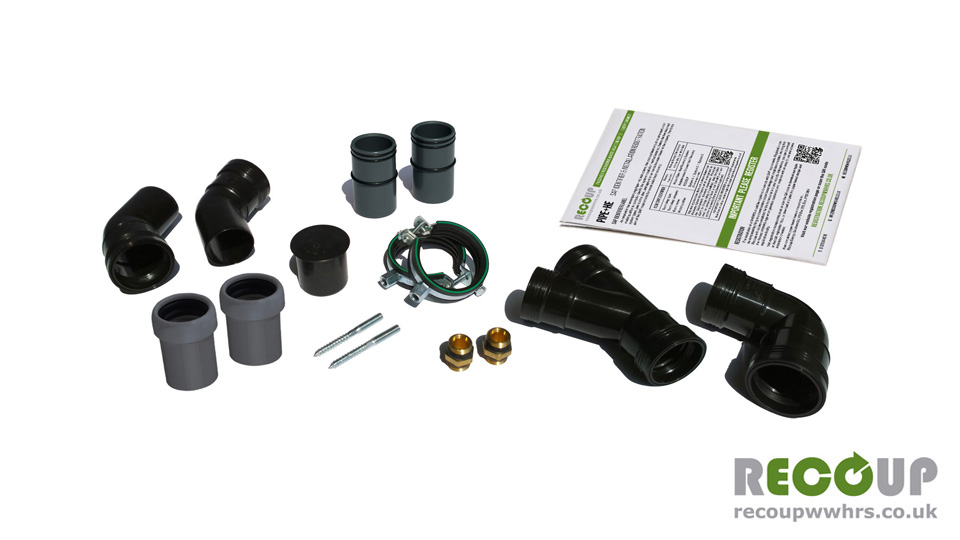
A combination of Recoup technologies was selected for the properties, including Pipe HEX and Easyfit+, alongside the Mira Advance Heatloop™ modulating instantaneous electric shower (mIES).
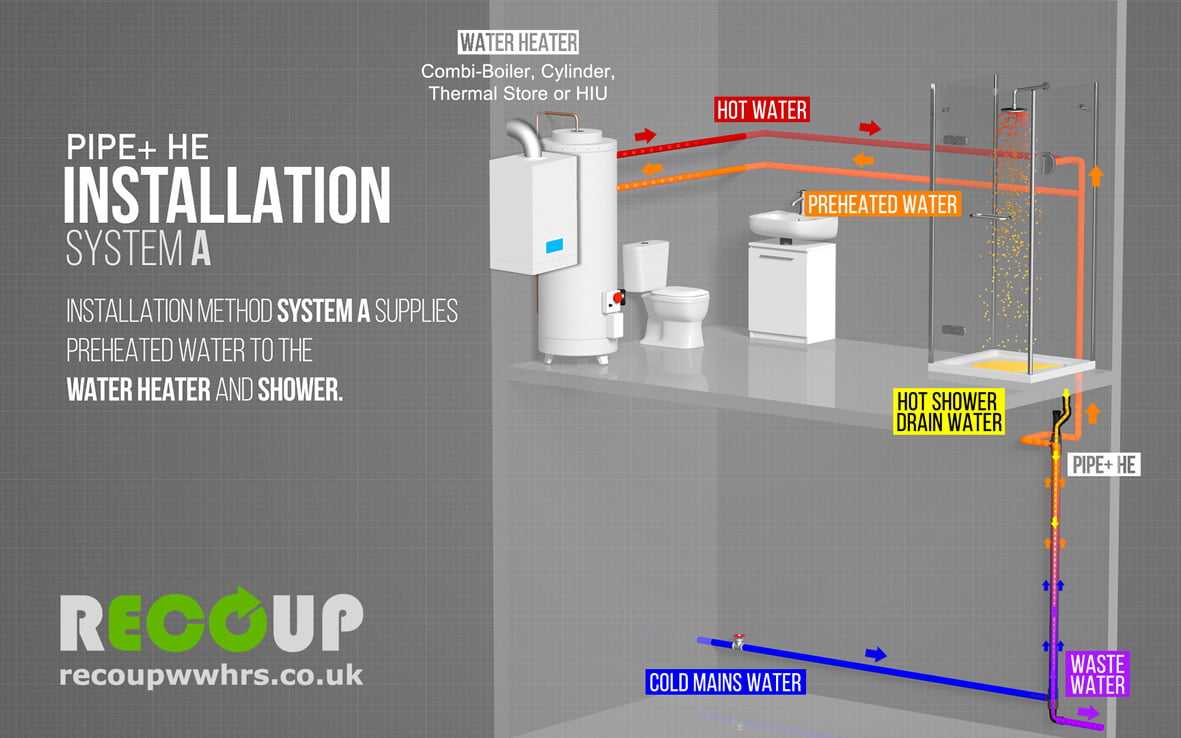
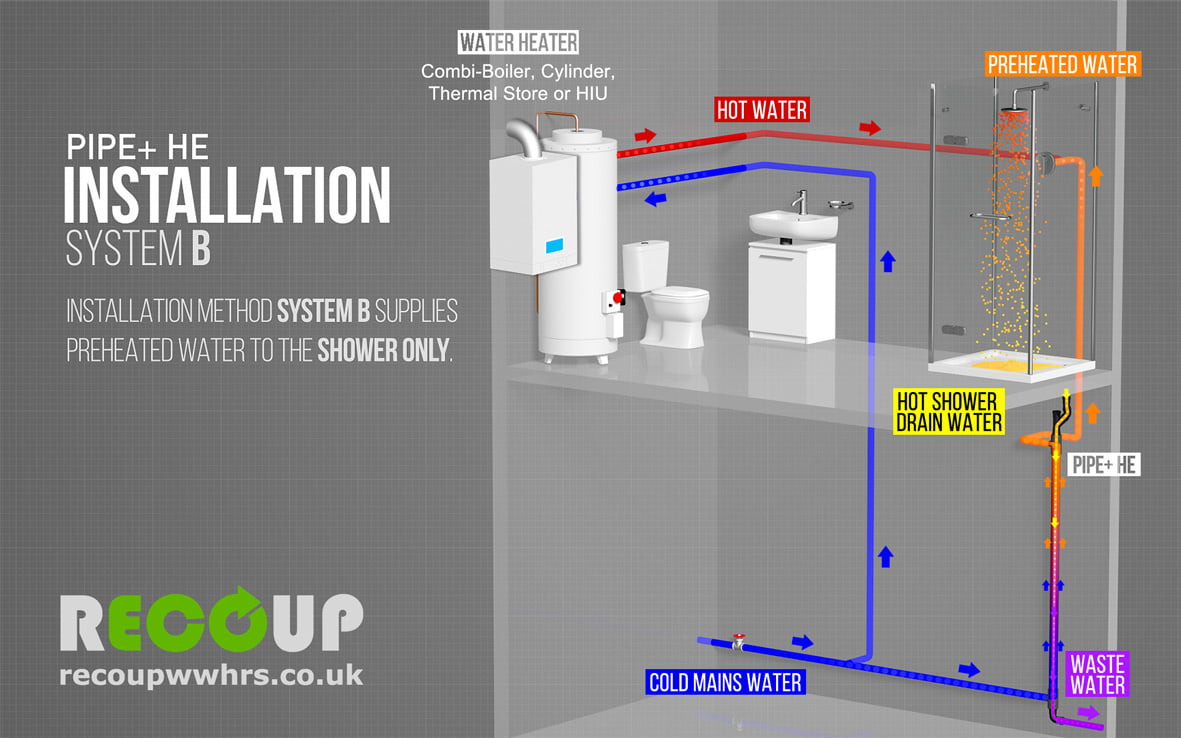
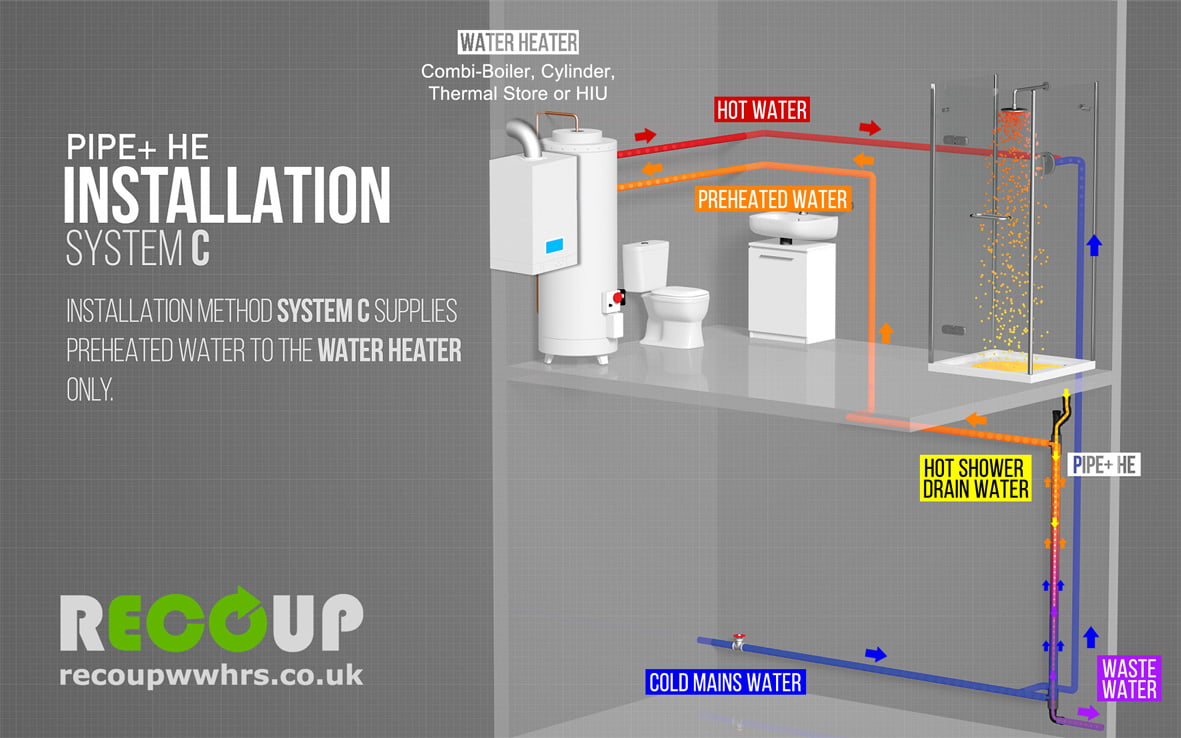
Waste Water Heat Recovery for Showers (WWHRS) recovers heat that would otherwise be lost through shower waste water, helping to reduce the energy required for hot water. Find out more about how Waste Water Heat Recovery for Showers works.
Operating automatically whenever the shower is used, WWHRS requires no controls or interaction from residents. This makes it particularly suited to social housing retrofit, where energy-saving measures need to deliver consistently without relying on changes in occupant behaviour.
This passive approach also means the performance of the technology is built into the property. Once installed, heat recovery takes place whenever the shower is used, regardless of who occupies the home.
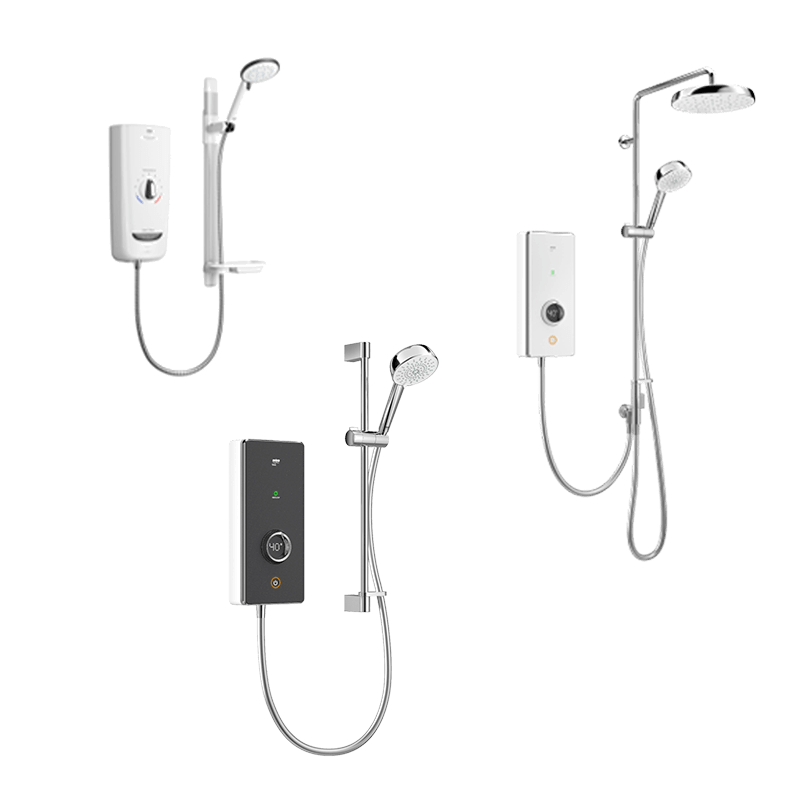
The introduction of mIES has also opened up an important additional application for WWHRS in existing properties with electric showering. The Mira Advance Heatloop™, introduced in 2024 as the first mIES of its kind, enables WWHRS technology to be used safely and effectively alongside an electric shower.
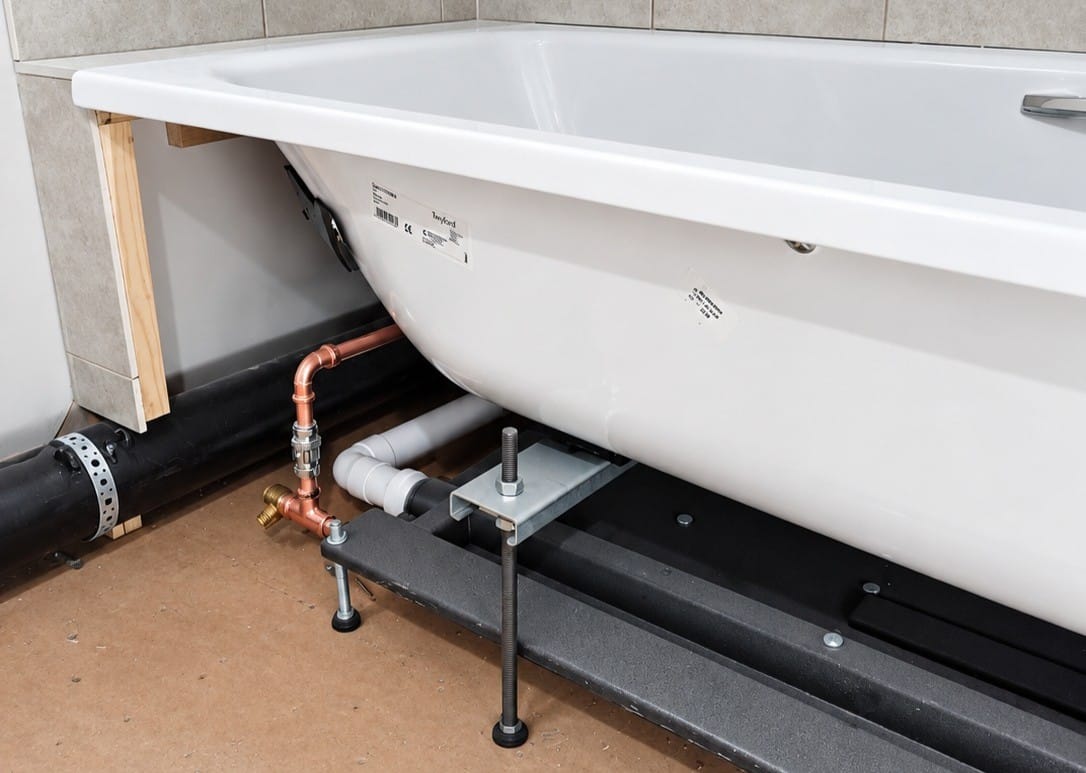
Easyfit+ WWHRS positioned beneath the bath, showing how WWHRS can be incorporated into an existing bathroom refurbishment.
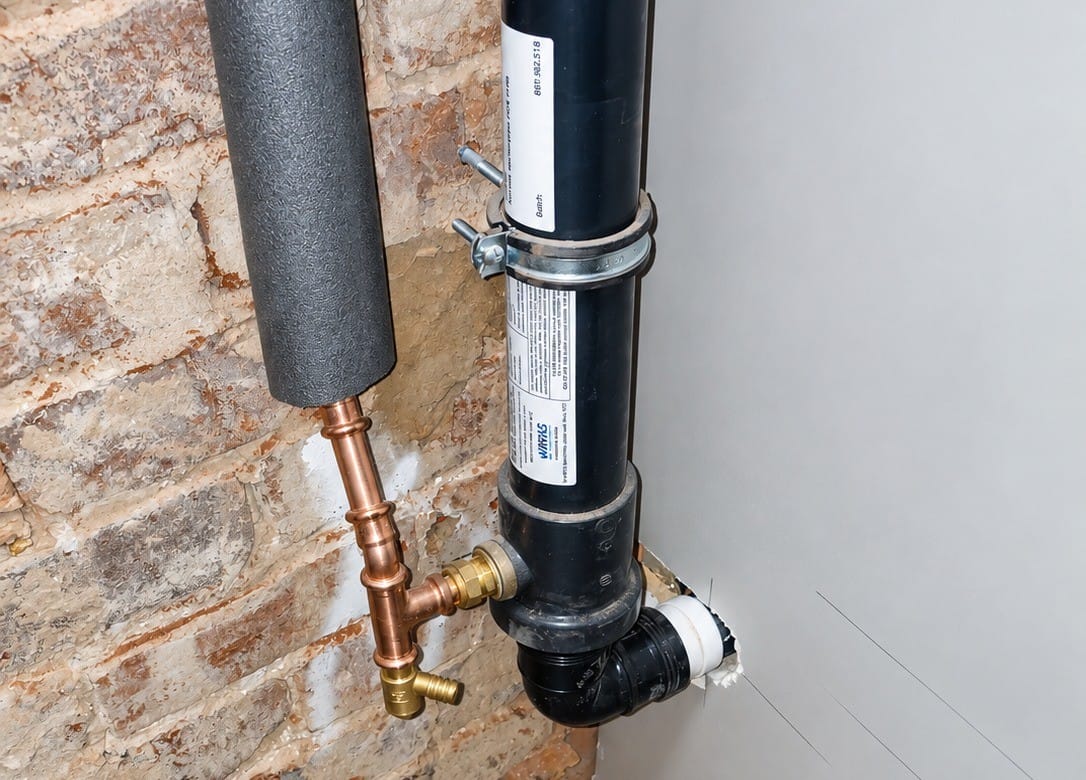
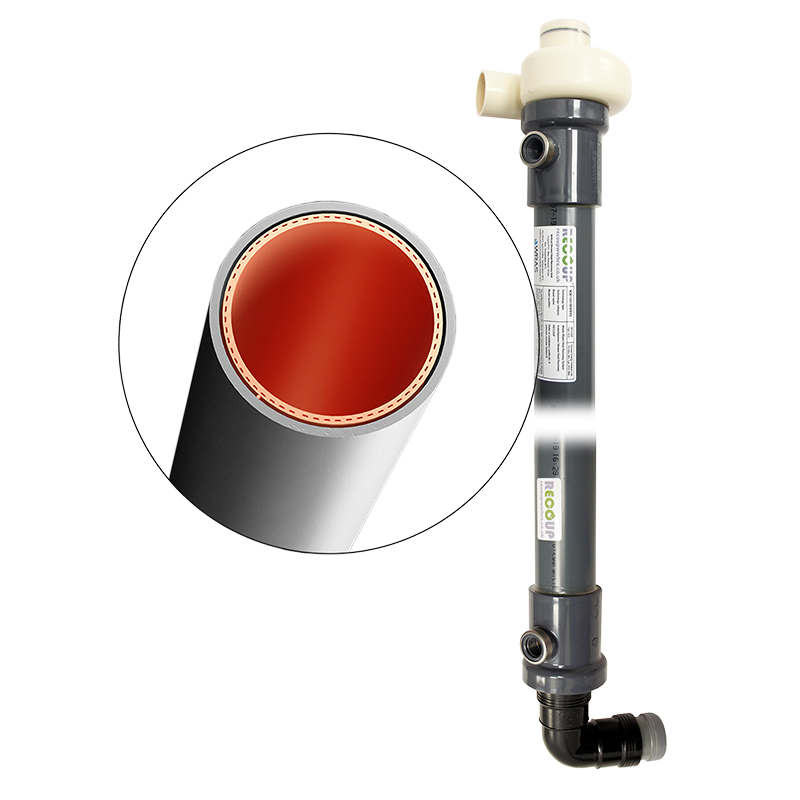
Recoup Pipe Hex WWHRS unit installed within the existing building fabric at Goldthorns.
Retrofit Installation Within An Existing Property
One of the key considerations for retrofit projects is how new technology can be incorporated into an existing building and plumbing arrangement regardless of the age of the property.
At Goldthorns, the Recoup products were successfully incorporated as part of the wider refurbishment, integrating with the plumbing and drainage arrangements while requiring minimal additional space.
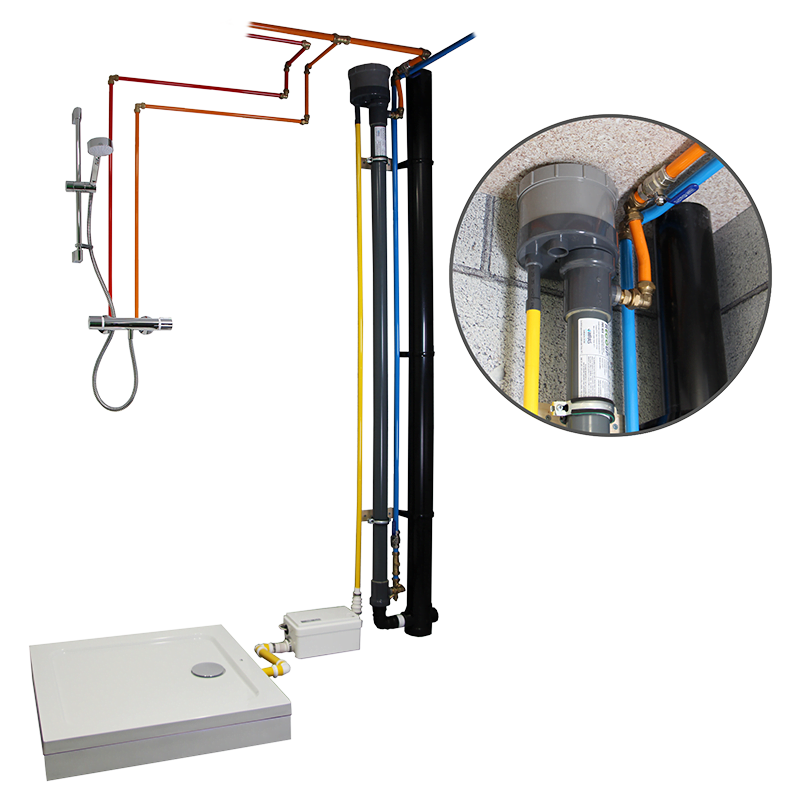
The Recoup Pipe HEX provided the high efficiency vertical WWHRS solution for the maisonette where the 2 floors allowed it to be installed on the ground floor below the bathroom. While the Recoup Easyfit+ was simply installed beneath the bath in the other three flats. Together, the installations demonstrate how different WWHRS solutions can be incorporated within the available space of an existing property.
The installation offered a number of practical benefits:
- Integration with conventional plumbing and drainage arrangements
- Solutions suited to different bathroom layouts and available spaces
- Straightforward incorporation during refurbishment works
- No moving parts within the WWHRS units
- Passive operation once installed
- No planned maintenance or user interaction
The Mira Advance Heatloop™ provides the opportunity to combine waste water heat recovery with an electric shower, extending the potential application of WWHRS within existing housing. Read more about why WWHRS-compatible electric showers matter for social housing retrofit.
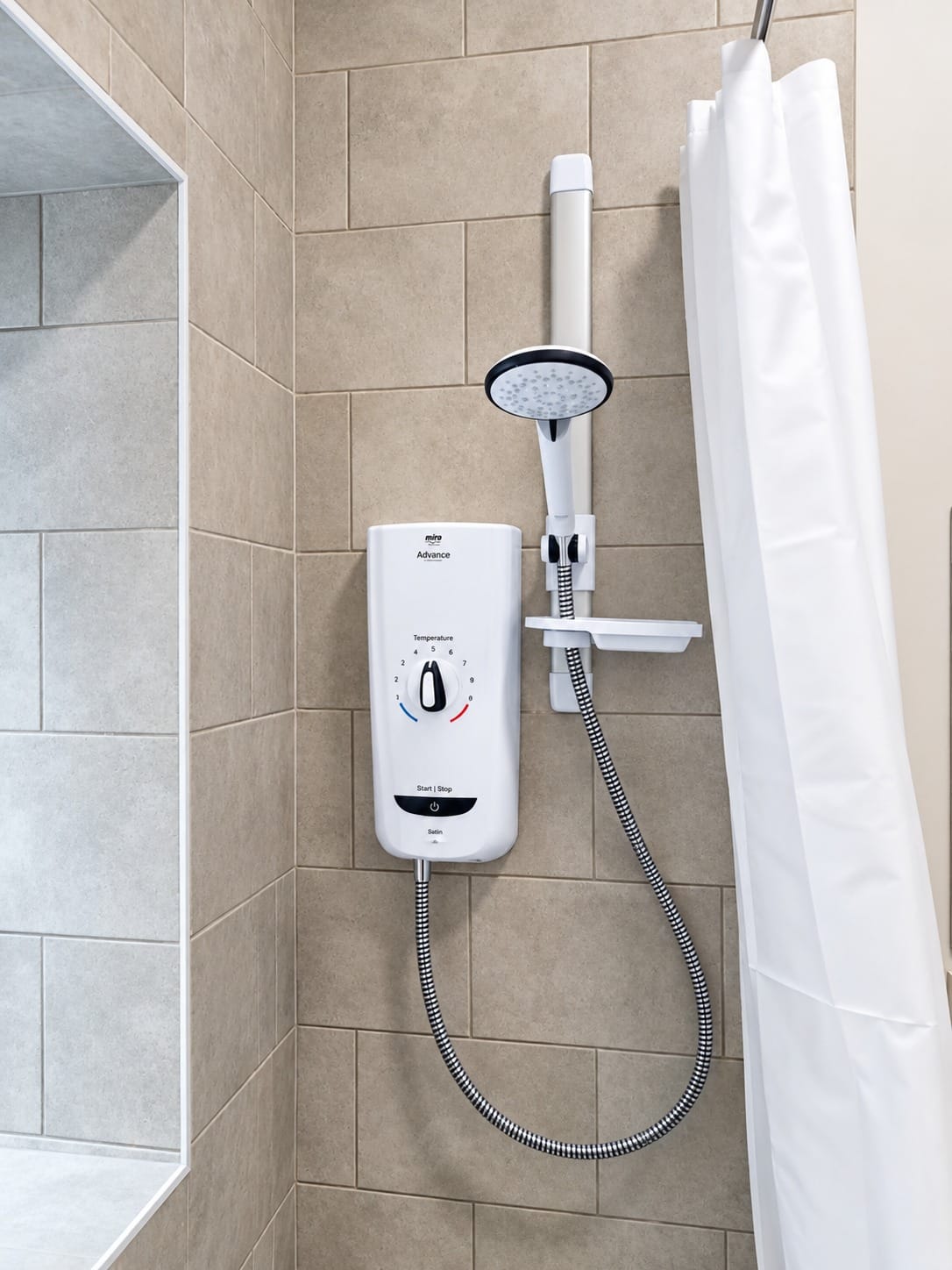
Mira Advance Heatloop™ electric shower installed as part of the energy efficiency upgrades at Goldthorns.
Demonstrating the Impact
An important part of the Goldthorns project is demonstrating the contribution that WWHRS and the Mira Advance Heatloop™ can make when incorporated into the refurbishment of existing social housing.
The properties were modelled in SAP 10.2, first with a standard instantaneous electric shower (IES), and then with a Mira Advance Heatloop™ modulating instantaneous electric shower (mIES) combined with Recoup WWHRS.
The modelling demonstrated both annual energy savings and improvements to the EPC rating score across all four properties.
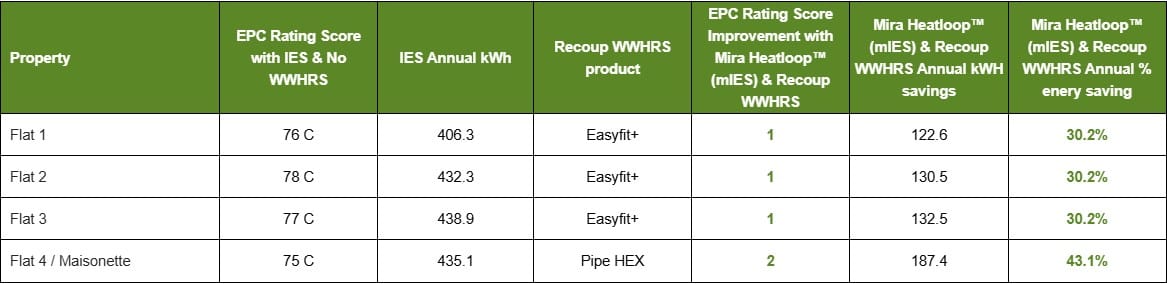
The Easyfit+ installations delivered a one-point improvement in the modelled EPC rating score, with annual showering energy savings of 30.2%. For Flat 4 / Maisonette, where the higher-efficiency Pipe HEX was specified, the modelling showed a two-point EPC score improvement and a 43.1% annual energy saving.
These improvements were achieved alongside other energy-efficiency measures being incorporated into the properties, which also contributed to the overall EPC scores. If further EPC improvements had been required, the modelling indicates that alternative configurations, including changes to the shower tray and enclosure and the use of Pipe HEX Active rather than Easyfit+, could potentially have increased the EPC rating score improvement to three or four points.*
This is particularly significant because the combination of electric showering and WWHRS was previously not recognised within SAP or RdSAP, the methodologies used to calculate EPC scores. Following the introduction of modulating instantaneous electric showers, Mira Showers and Recoup worked with the Building Research Establishment (BRE) and the Department for Energy Security and Net Zero (DESNZ) to assess mIES and WWHRS combinations for inclusion within the SAP Appendix Q database.
As a result, the energy-performance benefits of qualifying mIES and WWHRS combinations can now be recognised within EPC calculations, giving housing providers another option when considering the combination of measures required to improve existing homes.
Find out more about WWHRS, SAP, Part L and the Home Energy Model.
Figures are based on estimated SAP 10.2 calculations for the Goldthorns properties. Actual EPC improvements will depend on the individual property, WWHRS product and installation configuration.
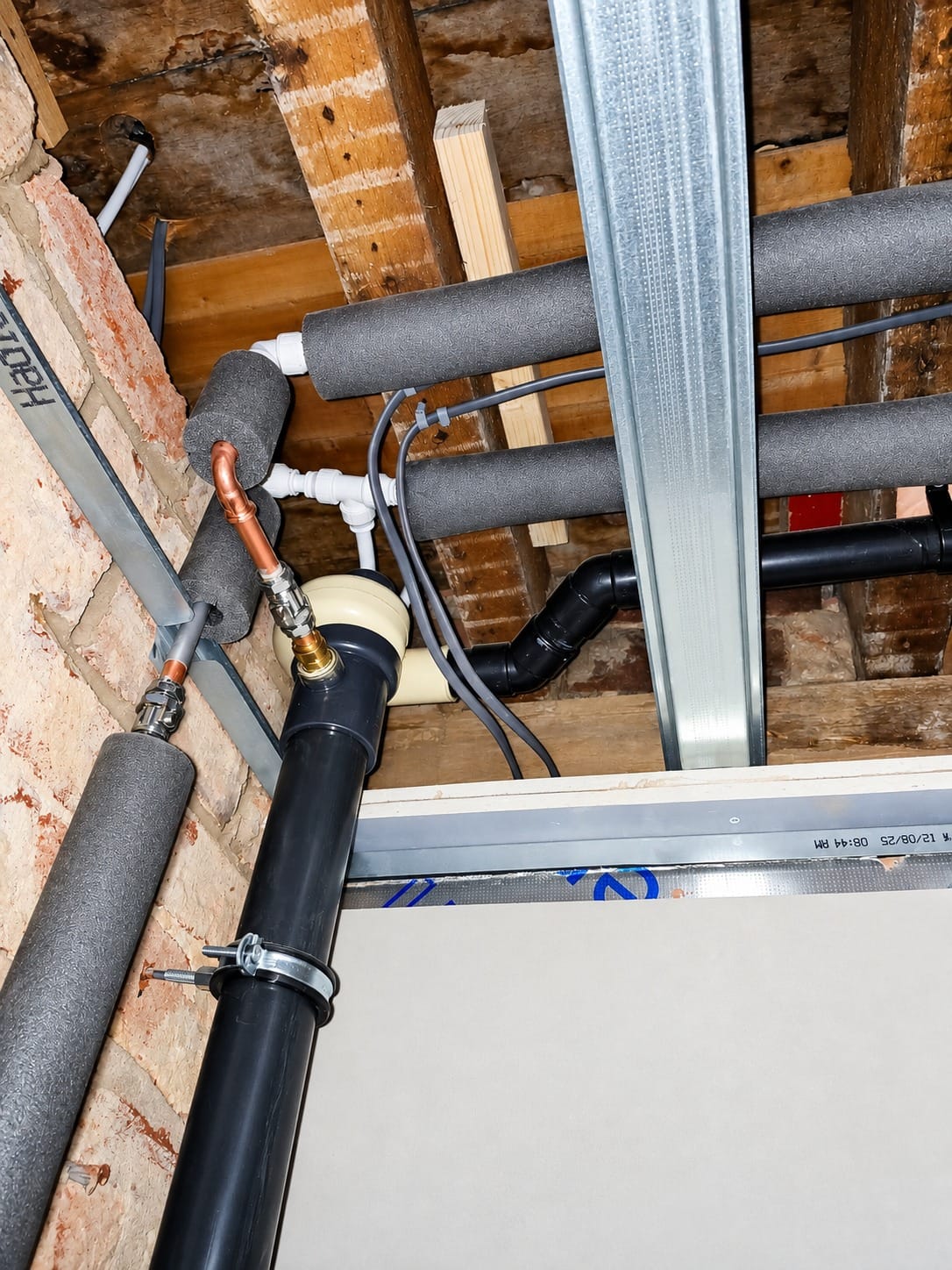
Pipe Hex Vertical WWHRS installation and associated insulated pipework at Goldthorns.
Benefits for Goldthorns Residents
For residents, the benefit of WWHRS is its ability to reduce the energy required for showering without requiring any change to the way they use their shower. Heat recovery happens automatically in the background every time the shower is used, helping to reduce hot water energy demand and contributing to lower household energy costs.
There are no controls or settings for residents to manage and no change to the normal showering experience. With no moving parts and no planned WWHRS maintenance requirements, the technology provides a passive, long-term approach to improving energy efficiency within the home.
This is particularly valuable in social housing, where the energy-saving benefit is built into the property rather than being dependent on occupant behaviour.
Supporting Social Housing Retrofit
Goldthorns is a relatively small project, but it demonstrates a much wider opportunity for social housing retrofit.
The Welsh Government’s Optimised Retrofit Programme takes a whole-home approach to improving existing social housing, considering the combination of fabric, space heating, water heating and energy improvements appropriate for individual properties.
WWHRS adds another measure to that mix by targeting energy that is already being used within the home but would otherwise be wasted.
Crucially, the ability for qualifying mIES and WWHRS combinations to be reflected within EPC calculations gives housing providers another recognised route through which showering energy efficiency can contribute to improving overall dwelling performance.
“Goldthorns demonstrates why hot water needs to be considered as part of the wider retrofit conversation. Housing providers are already looking at multiple measures to improve the performance of existing homes, and WWHRS provides an opportunity to reduce energy demand every time a resident showers, without asking them to change their behaviour. What is particularly valuable about this project is the opportunity to demonstrate that contribution in a real social housing refurbishment,” explains Caroline Bowler, Head of Residential Decarbonisation, Recoup Energy Solutions
By incorporating Pipe HEX, Easyfit+ and the Mira Advance Heatloop™ within the refurbishment, Goldthorns demonstrates a practical approach to recovering energy that would otherwise simply be lost down the drain, helping to reduce hot water energy demand and associated carbon emissions.
The additional project findings will provide further evidence of the role WWHRS can play as part of the combination of measures used to improve the performance of existing social housing.
*EPC improvement will vary according to the property, existing EPC score, WWHRS product, installation configuration and other dwelling characteristics.
More Case studies

Taylor Wimpey’s Zero-carbon Homes Trial Featuring WWHRS
Waste Water Heat Recovery for ShowersRecoup Energy Solutions’ waste water heat recovery systems for showers (WWHRS) are featured in all five of Taylor Wimpey’s zero-carbon ready trial homes at the Westland Heath development in Sudbury. Taylor Wimpey is on its journey...
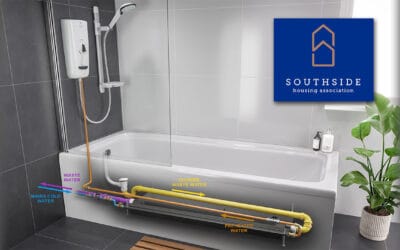
Southside Housing Association – Innovative New Shower System Installed Across Glasgow Residential Development
Waste Water Heat Recovery for ShowersThe UKs leading shower manufacturer, Mira Showers recently supplied Glasgow-based housing association Southside Housing Association with its new and innovative Advance Heatloop™ as part of a decarbonisation programme. The...
WWHRS helps Edinburgh City Council Social Housing project meet ’21st Century’ Sustainability Aspirations
Passively Recovering Waste Heat Energy With Every ShowerCongratulations to architects Anderson Bell + Christie whos' 75 unit social housing project: Greendykes Phase G won a commendation in the 2020 Scottish Design Awards (Category Architecture: Affordable Housing). A...